Performance


Preface
This article describes a media-archaeological, performance-based approach to study the historical art of projection. The approach helps to explore a performance practice of live shows using the magic lantern, and to approximate to the performative configurations of historical performance events in which they were presented. Objects of study are pictorial and written documents as well as material artefacts.
This approach was developed at the Institute of Media Studies at the University of Marburg for the DFG-research project “Performative Configurations of the Art of Projection for the Popular Transfer of Knowledge: Media Archaeological Case Studies in the History of ‘Useful Media’ and the Screen” (‘PerConfi’). It is based on approaches developed by the former research focus Screen1900 at the Institute of Media Studies at the University of Trier, starting from the case studies of the PerConfi project which were based on the following objective
in order to examine the art of projection as performance event, a media-archaeological approach is adopted that takes an exemplary look at three widely-spread dispositifs of the art of projection and analyses them as significant manifestations of the performativisation of the popular transfer of knowledge: 1) the transfer of phantasmagoria from the context of entertainment to the context of knowledge transfer (1820-1830); 2) the staging of spectacular performance events of public education using the example of the so-called dissolving views (1858-1888); 3) the widespread distribution and institutionalisation of the art of projection as a medium for visualisation in popular education and teaching (1870- 1919). On the basis of a selection of surviving works (glass slide series, readings), historical apparatuses and written sources, the project contributes to current research approaches of an archaeology of the screen and performative useful media.1
The approach is also inspired by case studies that methodically incorporate ‘media-archaeological experiments.’ ‘Experimental media archaeology’ as a research approach was developed by film and media scholar Annie van den Oever and historian Andreas Fickers.2 Headed by Fickers, the Luxembourg Centre for Contemporary and Digital History (C2DH) at University of Luxembourg is developing the methodological foundations of this research approach, with the cooperation of PerConfi in the research project ‘Doing Experimental Media Archaeology: Practice & Theory’ (DEMA) of C2DH.3 Parallel to PerConfi`s case studies and as a partner of DEMA, the cultural project illuminago conducts media-technical and performative hands-on experiments with historical artefacts.
In this article, the approach to exploring performative configurations of the art of projection is presented in a broadly generalised form that deliberately omits concrete examples. In this way, it is possible to adapt the approach to further media-archaeological case studies and hands-on experiments. The historical period addressed here can only be very loosely specified as a period from the mid-17th to the mid-20th century, and is determined by the use of projection apparatus (laterna magica or magic lantern) and the screen in live performance events. It is not possible to generalise the actual design of performance events of the art of projection and the varying procedures of their performance practice or the treatment of topics from science and education. Those are the objects of concrete individual case studies or of studies on thematically, spatially or temporally subsumed groups of cases, such as those dealt with by PerConfi.
Introduction
Exploration of the ‘historical art of projection’ requires consideration of material artefacts as well as pictorial and written documents. These relics, which are often fragmented and scattered, offer insight into contemporary variations in the use of projection apparatus (laterna magica / magic lantern) and projected images since the 17th century, into the development of the art of projection as a mass medium in the 19th century and, associated with this, into the cultural establishment of the ‘screen’ within the context of live performances featuring verbal or musical presentations.
The media-archaeological exploration of relics of the historical art of projection requires knowledge of a performance practice that is no longer common. The projection apparatus known as ‘magic lanterns’ (‘laterna magica’), the ‘lantern slides’ shown with them and the necessary other equipment are characteristic artefacts whose function in the staging of live shows with luminous images and visual effects on a screen often does not immediately reveal itself. The written ancillaries include readings, accounts of performances and trade literature on technical and aesthetic practices. At the time, these writings addressed readers experienced in staging magic lantern shows or in witnessing performance events in which such shows were presented. Paintings and engravings, as well as illustrations in press reports and technical literature, convey pictorial impressions of performance events and the applied techniques.
The trade literature also shaped the term ‘art of projection’ in the 1870s to describe its area of expertise:4 the term embraces the technology of various projection devices and the processes for design and technical production of lantern slides, along with the knowledge, skills and experience connected to the presentation of projected images and visual effects on a screen in the staging of live performances. Up until the first half of the 20th century, various authors used this term to describe the art of projection of their time as well as its history.5
In the further course of the 20th century, this media-historical subject received little academic attention. It was only as part of a ‘prehistory of cinema’ that it was increasingly perceived again, starting in the 1970s, initially with a focus on the area of projection technology.6 Within this perspective the generalised umbrella term ‘magic lantern’ or ‘laterna magica’ sums up not only various projection devices, but also their usages from the mid-17th to the early 20th century. More sophisticated later studies on the history of the magic lantern go beyond this reduction and examine the commonalities and diversity of differently constructed projection apparatus as a technical prerequisite for the creation of visual events on a projection screen in its contemporary context. In recent decades, the interest of collectors as well as museums and public archives in surviving projection apparatus and its use has once again brought to light thousands of lantern slide sets (mostly translucent glass images) that were used with the projection equipment. Along with the variety of lantern slide sets, their related lectures and readings, songs and musical items have also found attention as archival material worthy of preservation.
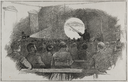
Surviving depictions of magic lantern shows portray events that are equally evocative of theatre performances and cinema shows, but differ from both. In depictions of such performances (magic lantern shows and lectures) in theatres 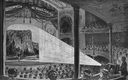

Media-Archaeology of the Art of Projection
The media-archaeology of the art of projection explores a hybrid medium that belonged equally to the visual media and the performing arts. The connecting element between surviving artefacts and written or pictorial documents lies in their relationship to performance events in which a sequence of projected luminous images and visual effects on a screen formed a performative unit with lectures, text recitations, songs and musical performances. The relics encountered either served to stage performances themselves or they provide information about the performances from various perspectives. Their examination in case studies asks about the performative configurations of visual, verbal and auditory show elements, as well as their presentation and how they were perceived in individual, empirically documented performance events or in the medium’s performance practices oriented towards such events.
The performance-based research approach of PerConfi methodologically uses the term ‘media archaeology,’ which is vague in its many usages, in a productive way.9 The term refers to a field of research whose perception has been overlaid by the further development of audio-visual media. The exploration of the art of projection resembles archaeological methods in so far as the relics, which are often scattered and fragmented, first have to be ‘excavated’ as sources for the performance practice of the art of projection and made to speak. These historical media techniques and practices of live presentation differ significantly from later (audio-)visual media such as sound film and television. Media-archaeological case studies require an individually devised approach that starts from found material in as impartial a way as possible. The media-archaeological approach records and interprets the material artefacts in their preserved forms and ascertainable functions, without making a teleological, aesthetic or social assessment or aiming for a speculative recreation of the individual or ‘authentic’ intentions, desires, experiences and insights of the historical performers.10 The goals are approximations to historical performance practices and performance events in source- saturated case studies, and identified procedures of descriptive or experimental reconstruction, especially in the case of fragmentary evidence. In doing so, film and media theories can be critically included, but not transferred directly to the encountered relics of the art of projection.
Media-archaeological experiments offer helpful and sometimes vital grounds for descriptive and functional analyses in case studies of the historical art of projection: the actual handling of surviving projection apparatus, lantern slides and readings in media-archaeological experiments permeates the visible surfaces of the exemplary objects and reconstructs their function as usable objects. Through these kinds of experiments, implicitly contained technical and aesthetic potentials for the design of live performance events using projected images become comprehensible.11
Terminology
This section introduces the use of terminology in the performance-based approach to the media archaeology of the art of projection and addresses the introduction and use of some basic terms and concepts. The historical term ‘art of projection’ introduced above encompasses the technical, aesthetic, and performative potentials of the hybrid medium. Within the performance-based approach presented here, the more specific term ‘historical art of projection’ covers the totality of its performance practice and the historical performance events that emerged from it. The technical and aesthetic knowledge of performers and its application in time-based live performances is summarised as ‘performance practice of the art of projection’. This practice synaesthetically connects the performative design of lectures, text recitals, songs and musical pieces to a precisely attuned sequence of luminous images that are projected from a projection device on to a projection surface, the ‘screen’.12 The practical knowledge connected to the art of projection varied with its historical development, the applied technique, the design and contents of the presented images and texts, as well as with the establishment of the medium’s infrastructure.
The variations of this knowledge become visible in conceptual modifications of the historical terminology. It is therefore necessary to include the encountered historical terms in media- archaeological case studies and to present them with commentary. When using foreign language sources, it is advisable to include the found historical translations. However, communication among collectors, scholars and people engaged in the cultural sector requires the use of current media- and film-historical terms, which often require clarification as well. An example of this is the widespread use of the umbrella term ‘laterna magica’ (magic lantern). This term assumes a historically broad classification but remains unclear in relation to the concrete functions of surviving artefacts, if differentiated descriptions of the designated projection technique and its performative possibilities are not also included. In media-archaeological case studies, other designations for the apparatus used in sources can be explained with the terms ‘projection apparatus’ or ‘magic lantern’ (‘laterna magica’), but not replaced by them. Typical examples are the designations ‘improved phantasmagoria lantern’‚ ‘strongest hydro-oxygenic gas apparatus’ and ‘sciopticon’/‘skiopticon’, whose technical and aesthetic properties are examined as elements of performative configurations in the case studies of PerConfi. In the same way, the overarching use of the term ‘lantern slide’’ can be accompanied by a description of the functions or details of individual imaging procedures, making use of historical found terms whenever possible. The generalising use of the now internationally common term ‘screen’ to designate the projection surface often simplifies communication, and opens a long-term perspective on the ‘archaeology of the screen’ and its connection to a ‘history of the present’.13 However in media-archaeological case studies, attention to contemporary designations of the projection surface and its associated technical and aesthetic properties is an indispensable requirement of the archaeology of the screen as well.
For an approximation of the performance events of the hybrid medium ‘art of projection’ and for the media-archaeological exploration of its performance practices, a version of the term ‘performance’ is adapted here, which was originally formed in theatre studies and has become a basic term in cultural studies.14 This concept starts with the relationship between performers and spectators, whose interaction also constitutes the live performances as events. For the presentations of live performers of the art of projection, the approach uses the term ‘magic lantern show’, or the shorter term ‘lantern show’, which is now internationally common in professional circles of film and media history. Based on performances in the theatre, this article characterises the time-based planning of the sequence of a lantern show as ‘staging’, and regards staged lantern shows as integral parts of the complex entirety of performance events. Their technical and aesthetic elements, as well as staged and spontaneous actions and sequences, are recognised in material artefacts, written documents and pictorial representations and designated according to the terminologies elaborated above. As ‘performative configurations’ in ‘dispositifs of the historical art of projection’, the changeable interrelations of the components of these performance events are made the object of media- archaeological examinations.
Performance Practice and Performance Events of the Historical Art of Projection
“Performance is used to refer to an event that results from the confrontation and interaction of two groups of people who come together in one place at the same time to go through a situation together in bodily co-presence, whereby they operate [...] as performers and spectators.”15 Using this relation as a starting point, theatre scholar Erika Fischer-Lichte introduces a concept of performance that has acquired a comprehensive scope in cultural studies16 and emphasises the term’s immense potential for innovation in the “historical hermeneutic sciences as well as the social sciences and art theory.”17 Performers encounter the audience in different kinds of performances “always in their bodily being-in-the-world, whether they are actors, singers, dancers or athletes, politicians, shamans or priests.”18
The performances of lecturers, reciters, storytellers, preachers, singers and musicians in live performances of the historical art of projection are directly included in this broadly defined term. The lectures, text recitals, songs and musical pieces of these performers address an audience they interact with in bodily co-presence. A characteristic property of the art of projection is the interaction of performers and operators at the lantern.19 The result, however, is a perceived interaction between live performers and the visual events on the screen projected by the lantern: the live presentation appears in performative connection with the coordinated configurations of projected images and visual effects.
As further elaborated below, presentations of performers and operators can be planned precisely in the staging of a lantern show. Due to the diverse possible options for action and behaviour of all involved, however, the actual course of live performances as well as their perception and appropriation by the audience can never be fully anticipated, either in dispositifs of the art of projection or in those of other live performances. Accordingly, surviving artefacts such as lantern slides and projection apparatus or written documents such as lectures, performance reports and technical handbooks, along with illustrations connected to them, prove to be media-archaeological relics of a historical performance practice. However, they cannot reproduce the actual course of historical performance events, or at least only from certain points of view. The performance-based approach to the media archaeology of the art of projection starts from this basic problem of all live performances20 but requires specific forms of approximation to the performance events and performance practice of this hybrid medium.
Live Performance or Media Presentation
To use a concept of ‘performance’ that stems from performance studies to study the art of projection requires an explanation of approaches in theatre studies that do not utilise this term for ‘medialised performances’. These approaches base the distinguishing criterion on the bodily co- presence of live performers and audience in a place of real-life assembly.21 This creates a conceptual distinction between (1) live performances in the theatre or presentations of performance art and (2) presentations or broadcasts of film, television and video recordings in which, at most, virtual performers act in seeming presence on the screen.22 Through the automation of showings in cinema and television, live presentation as a former self-evident characteristic of all kinds of performance has become an attribute that distinguishes the performing arts from performance-like forms of presentation in audio-visual media. In contrast, there was no alternative to live performance up until the 20th century, neither in theatre nor in the art of projection.
Seen from a perspective of performance practice, it is therefore necessary to distinguish between historical forms of live performance with projected images on a screen, and automated forms of presentation or technical remote broadcasting of (audio-)visual media. The bodily co-presence of performers and spectators characterises the art of projection as a historical form of the performing arts: its characteristic staging potentialities connect live performance and screen.
From today’s perspective, live performances of the hybrid medium of the art of projection are thus contrasted with automated forms of audio-visual media, which – from the first half of the 20th century, and at the latest by the emergence of sound film – were established as the dominant forms of screen media.23 Our introductory discussion on terminology shows that similarities between technical arrangements and presentation of a visual event on screen should not mislead us to simply transfer research approaches from Film and Media Studies to the art of projection. Only the media-archaeological exploration of performance practice, and of concrete performance events in their contemporary context, can establish the relevance of the art of projection for the history of film and cinema as well as audio-visual media of the 20th and 21st centuries. It clarifies their historical preconditions without retrospectively reducing them to primitive precursors: the film historian Martin Loiperdinger, for example, questions the notion of research of a “screen history” as a “perspective for film and television studies” and criticises the classification of the art of projection in a ‘pre-cinema history’ common in film studies as a “reduction of the visual media cultures of the 19th century to a technical pre-history of film and cinema”.24 Loiperdinger reveals that in large parts of academic Film Studies the screen is treated as a technical prerequisite of cinema that is available as a matter of course while its historicity as “culturally established space for the conveyance of images” is ignored.25 A similar argument was made by film historian Charles Musser who put the history of cinema into a long-term perspective and termed it a “History of Screen Practice”.26 Musser’s approach reaches back to the 17th century and leads the way for the consideration of historical preconditions in film historical research.
The performance-based approach is broadly consistent with the aim of a 'History of Screen Practice' but does not give a foregone priority to either screen or live presentation in the study of historical artefacts and performance events. The examination of the mutable configurations of these elements is directed with equal attention to all parts of the live performance, the events on the screen and their relationships to the audience that are found or can be reconstructed. The approach is oriented towards researching the historical art of projection in its original contexts and does not teleologically assume a historical goal (such as the “birth of film” or “birth of cinema”27) that would give it historical significance only in retrospect. However, from the evolutionary perspective of an archaeology of the screen, as proposed by Erkki Huhtamo, or in the approaches by Loiperdinger and Musser mentioned above, media-archaeological research of the art of projection can also be utilised productively for the history of film and audio-visual media of the 20th and 21st century. Examination of the continuity and various transformations of topics, motifs and narratives and their forms of presentation in performative configurations can be continued in studies on a transmedia screen history of film and cinema as well.
Around 1900, projection of early moving pictures was a component of the performance practice of the art of projection. The performance-based research approach on the media archaeology of the art of projection includes case studies on live performances in which both films and lantern slides were presented. Media convergence in the history of the art of projection, and the divergence of media that emerge from it, are urgent research needs in the history of visual media, for which further development of the research approach on performative configurations of the historical art of projection could prove useful.
Sources of the Historical Art of Projection
The physical heritage of historical performance events and the performance practice of the art of projection includes artefacts such as lantern slides and early films, screens, projection devices and corresponding equipment, together with material relics of their manufacturing. It also contains written documents such as readings, sheet music, reports and notes on stagings and performance events, as well as relevant technical and creative literature. Illustrations, informative graphics, artistic drawings and paintings have also survived as pictorial documents.
Media-archaeological case studies on the historical art of projection start by locating appropriate sources in archives and collections or miscellaneous places of discovery. The documentation of surviving artefacts, written documents and pictorial representations for case studies requires a high degree of attention and explorative openness, as found relics are mostly disorganised and inventories often survive only in fragments. Occasionally individual components of the same item turn up scattered in different places. Found sources can also show first outlines of previously unknown areas of the research field and offer clues to missing parts of the heritage.
The surviving lantern slide sets represent typical sources for media-archaeological exploration of the historical art of projection. They are the result of technical and creative processes, at the end of which were created pictorial works that were not in themselves ready for immediate viewing: in the staging of lantern shows, they took on the function of technical image information. By combining the instrumental functions of projection apparatus and the technical image information contained in the slides, a sequence of luminous images and projection effects potentially emerges on the screen. Their presentation is the task of operators in the performance practice, as described below. Readings and possibly sheet music are arranged and coordinated with the slide sets, and the performance events function as a synaesthetic combination of visual, verbal and sound presentations.
Images, texts or musical compositions were sometimes directly created for use in the art of projection, but often existing works that had already been presented in other forms (e.g. exhibition, illustration, reading, concert) were adapted for it. In some cases, performance instructions were provided with the materials. The heuristic description of such compilations as ‘works of the art of projection’, as used on the research platform eLaterna, directs attention to the unity of their hybrid components in performance practice.28 On closer examination, though, this unity proves to be a changeable entity that could last over long periods of use, could be modified during different presentations or, in some cases, might serve for a unique performance event.
The term ‘works of the historical art of projection’ was coined for the archival and editorial documentation of surviving lantern slide sets with associated readings, sheet music and instructions for presentation. The concept of editions on the research platform eLaterna “conceives works of the historical art of projection as definable entities whose material components and their various functions in performances determine the structure of source editions”.29
An expanded use of this concept of ‘work’ for media-archaeological case studies focuses on the instrumental function of surviving works: this helps to develop questions concerning the function of the hybrid and variable combinations of lantern slides, readings, sheet music and instructions for presentation in the performance practice. On one hand, those questions address the technical manufacture of the artefacts; on the other, the design of narratives and depicted situations or visual effects in the work’s components and their partly situational combination. This raises the question of how the potentials of given works were used in live performance. The open concept of the term ‘work’ also directs attention to recognisable or assumed missing components of works that only survive in fragments.
Performative Configurations in the Dispositif of the Historical Art of Projection
As a basis for media-archaeological case studies on performative configurations of the historical art of projection, the compiled sources are set in the heuristic frame of reference of ‘dispositifs of the historical art of projection’: this compound term was established to conceptually include the heterogenous diversity of constitutive elements of performance events of the art of projection and possible influences of external factors.30
Dispositifs of the art of projection include the heterogeneous technical, creative, and organisational elements of performances as well as the interconnected fields of action of organisers, performers, operators and spectators.31 Within this frame of reference, surviving artefacts and readings can be considered and analysed in terms of their performative functions. In case studies, the heuristic frame of reference of dispositifs as a media-archaeological area of investigation takes the place of the historical environments from which the surviving sources originate and to which they attest, which of course no longer exist. The still static recognition of the elements of dispositifs of the art of projection represents the starting point for the media-archaeological exploration of its changeable configurations in the temporal course of historically documented performance events and in potential sequences of performance practice. The performance-based approach is directed towards the identification of the art of projection’s ‘performative configurations’: it enquires after dynamic forms of transformation of the configurations of visual, verbal, and auditory elements and into the configurations of events in the field of live presentations and their perception in the temporal sequence of live performances.
The study of performative configurations of the historical art of projection uses ideal-typical generalisations of the research so far, as well as historical comparative examples to determine characteristic components of performance dispositifs. The description of typical functions of projection devices and slides as well as the areas of action of performers, operators and audience serve as an aid to a descriptive understanding and functional analysis of the surviving sources on the performance practice. The media-archaeological approximation of traditional performance events draws on ideal-typical generalisations to reconstruct the event under examination as a concrete variation of the dispositif of performances within the realm of possibility. As part of the study of performative configurations of the art of projection, description or functional analysis of written sources and/or pictorial representations, together with consideration of the surviving artefacts, will allow these ideal-typical generalisations to be replaced with more specific understanding.
In addition, the examination of performative configurations allows for the media-archaeological exploration of fragmentary relics and the annotated completion of missing parts in the reconstruction of historical performance events. Such reconstructions do not allow for a detailed analysis of events that are only documented in fragments, but they point to their existence in their own contemporary context and convey approximate ideas of the technical and aesthetic functions of the surviving fragments in performative configurations.
Experimental media archaeology uses reconstructed dispositifs of the art of projection as orientation for the development of laboratory setups for the media-technical and performative examination of the surviving artefacts, and even enables new productions of magic lantern shows informed by media archaeology. With regard to media-archaeological experiments, the concept of performative configurations draws attention to the implicit technical and aesthetic functions of the historical objects under investigation and their potential for the creation of shows in the performance dispositifs.
Live Performance and Slide Projection
In this section, characteristic fields of action in dispositifs of the art of projection are outlined from PerConfi’s media-archaeological perspective. To begin with, the focus will be on the presentations of performers and operators. The following section will expand the view to the socially interconnected relationships of all involved in the performative configurations of performance events.
Recitations, narrations, songs and ballads, sermons or lectures are forms of presentation with which live performers directly address the audience in dispositifs of the art of projection. According to the terminology of theatre scholar Hans-Thies Lehmann, they act on the “theatron axis”. This term refers to “an orthogonal axis of communication between the stage and the (really or structurally) distinct place of the spectators.”32 In the art of projection, performers usually present texts in monologic form and adopt, consciously or intuitively, an epic posture similar to other reciters, storytellers, singers, preachers and lecturers. The “intra-scenic axis of communication” in the dialogues of dramas (separated by a ‘fourth wall’ between the stage and the auditorium), which is, according to Lehmann, transverse to the theatron axis, hardly plays any role in found dispositifs of the art of projection. In this regard, the historical art of projection also differs from feature films, at least since the introduction of sound film. However, the function of conférenciers in silent film presentations resembles performative configurations of the art of projection, even when seemingly dialogue-based scenes take place on the screen. The essential configuration of actions on the theatron axis remains even when using stylistic devices that appear dramatic, for example, when performers temporarily embody characters in a narrative, or historical figures, and slip from one role to another by change of persona. In such configurations in the art of projection, actions or the course of an event are depicted by combining text recitations with projected images and visual effects on the screen, possibly supported by musical accompaniment and accentuated by sound effects. Axes of communication between verbally and physically acting performers, musicians and operators are not located behind a ‘fourth wall’, but can become perceptible as a form of action of the representation, even if they do not belong to the narrated or explained event.33
The immense variety of visual show elements rests on the ‘design principle of the screen’: the projection screen is basically an empty image area that makes it possible, with the help of projection apparatus and the technical image information inserted into it (such as lantern slides or films), to show any number of highly variable, representational and abstract images or writings in freely designed sequences.34 The reflection of light on the screen continuously creates the appearance and disappearance of luminous coloured areas in front of the spectators’ eyes, which take on their form as representational, abstract or ornamental images or even as writings on the screen. The ‘movement’ of visual processes in the projections generally appears as a transformation of the luminous images through their temporally designed sequence, for example by ‘dissolving’ from one view to another. By using various mechanisms, images and image sections can also be set in motion.
In contrast to the automated forms of presentation of sound film and many audio-visual media of the 20th century, in the historical art of projection the temporal sequences of the visual events shown in the projected images on the screen are presented live by operators (lanternists) who precisely coordinate them with the performers’ actions. Complying with the detailed planning of this interaction requires technical knowledge and skills paired with aesthetic sensitivity for the projection, to provide the audience with a synaesthetic experience of all parts of the presentation. Operators use the slides selected for a show as technical image information in the projection apparatus and control the appearance of the luminous images and visual effects on the screen. The individual handling of transitions from image to image, mechanisms of image movement, control of the brightness of the light source as well as dissolving views and superimpositions are typical actions of skilful and creative operators that have to be harmonised with the performers’ presentations.
In the art of projection, operators act on the ‘axis of screen performance’.35 This is divided into two parts: one connects the projection apparatus with the screen (the ‘screening axis’), the other connects screen and audience (the ‘perceptual axis’). The operators‘ courses of action are based on this function of the screen as interface: by handling the projection apparatus they determine the events on the screening axis; their objective is the staged design of events on the screen that is perceived by the audience on the perceptual axis. As soon as a projection appears on the screen, it can no longer be technically influenced. Skilful operators, however, can immediately react on the screening axis and adjust mistakes (such as upside-down images) or technical inadequacies (such as projections out of focus) – preferably before they disrupt the intended perception on the perceptual axis.
Performance as Event
Performers and operators, with the possible additions of directors, organisers and commissioners, determine the content and staging of the show and control its parameters. However, the spectators also take an active role as counterparts in live performances. Fischer-Lichte emphasises: “Whatever the performers do has an impact on the spectators and whatever the spectators do has an impact on the performers and the other spectators. In this sense, the Performance only comes into existence during its progression.”36 Fischer-Lichte develops her performance concept based on theoretical work by Max Hermann, the founder of theatre studies in Berlin.37 In his writings published around 1920, Hermann shifts the focus from a literary definition of theatre as a form of presentation of literary works to a theatrical definition of theatre through the event of the performance:
[The] original meaning of theatre refers to its conception as social play – played by all for all. A game in which everyone is a player – actors and spectators alike [...] The spectators are involved as co-players. In this sense the audience is the creator of the theatre. So many different participants constitute the theatrical event that its social nature cannot be lost. Theatre always produces a social community.38
In this sense, the performance-based approach to the media-archaeological exploration of the historical art of projection starts from the entirety of social events in live performances. It does not reduce the performance to the function of transmitting the content of used pictorial, written and compositional works to the audience. Rather, the surviving works are regarded as part of the performative configurations of performance events in which they could be presented by performers and operators in different ways and be perceived by all participants.
The interaction of performative configurations in performance events of the art of projection starts with the participants’ arrival at the venue. Possible places of assembly are theatres, public halls, lecture halls, classrooms, churches and private rooms.39 The ‘social community’ referred to by Herrmann gradually forms as the spectators take their seats and the performers prepare for the show. In the course of action of all participants and their reactions to what is experienced, the unique, transitory ‘social play’ evolves in the microcosm of each performance.
Institutional, organisational, spatial and technical preconditions in venues create the conditions and a spatial environment for the social events in the microcosm of a performance.40 In this context, the verbal presentation of narratives and reports or the presentation of facts remains inseparably linked to the bodily co-presence of performers and spectators and the social event of the live performance. Using the performers’ voices, postures or their energy and present conditions, the texts recited in interaction with the luminous images on the screen obtain their own character within the communication of the theatron axis. The performers can adapt the forms of expression of their presentation willingly or intuitively to the performance situation and insert remarks or respond to comments from the audience. Applause, laughter, tears, even grumbling and booing are also integral parts of communication on the theatron axis, which allows for questions or interjections as well. The live changing of the slides allows the operators to adjust the timing in which images and visual effects are presented on the screen to the events taking place during the performance.
The Presence of Performative Configurations in Performance Events of the Art of Projection
Images, visual effects, language, music and sound effects are inserted into the performative configurations of lantern shows via the interweaving of the theatron axis with the ‘axis of screen performance’. There were no limits to themes and motifs in works of the historical art of projection, as long as relevant lantern slide sets and texts could be produced or procured. Their instrumental function as ‘presentations’ establishes – literally – the sensually perceptible presence of these show elements in live performances.41 The individual voices of the performers render the texts audible in the fleeting moments of their utterance. Changeable light areas of different colours and brightness are immediately present on the screen. The visual experience, which is perceived in the form of representational or abstract images (or projected written text) and determined in terms of content, originates from them. The immediate experience of vocal and visual sensory impressions may be combined with the auditory perception of music and designed sounds. The examination of the presence of performative configurations in performance events requires, in addition to the perception of narratives or of represented facts, a sensitive openness to hints of immediate visual and auditory experiences. Even seemingly incidental perceptions of the situation, such as sounds or visible behaviour of other audience members or the tactile perception of furnishings (e.g. rows of seats), determine the experienced presence of a performance event alongside the presentations themselves.
The study of performative configurations of the art of projection further asks how the live presentation of the performers and the play of luminous images designed by the operators turn the depiction or representation of real or fictional people, living beings, objects, rooms, landscapes and events into inherent elements of the sensually experienced present in the social microcosm of performance events. The presentation of visual, verbal and auditory show elements could explicitly clarify or claim that the incidents shown and described in the ‘here and now’ of the performance are, were or will be situated in another, actually existing or fictionally narrated ‘present’, in another place and time. The design principle of the screen also allows for illusions of a seeming presence of the events on the screen, which can be played with in performative configurations.42
At the end of the show, the voices have faded, the sounds have died away and the luminous images have vanished from the screen. The social microcosm of the performance dissolves, what remains are memories or the experience of an inner change – perhaps an echo of pleasant sensations up to a feeling of delight or lasting shock and catharsis in the face of tragic fates.43 Lasting forms of the audience’s appropriation of the experience are possible as well, combined with the impression of having gained new experiences or acquired knowledge. Memories of a boring event, unpleasant presentations by the performers or annoying behaviour by some of the spectators might prove to be less desirable.
Social Action in Performative Configurations of the Art of Projection
The configurations of presentations in a lantern show and the configurations of actions, behaviour and interaction of all participants shape the entirety of the performative configurations in the unique social events of live performances. Max Weber’s insightful approach for the “empirical sciences of action, such as sociology and history” offers helpful impulses for the study of social relationships in performance events of the historical art of projection.44 This approach seeks the meaningful interpretation of actions in the actions themselves or in testimonies thereof. According to Weberְ’s sociological terminology, the aesthetic presentations and performative interactions in performance events of the art of projection are always also to be regarded as ‘social action’, “‘action’ insofar as the acting individual attaches a subjective meaning to his behavior [...]. Action is ‘social’ insofar as its subjective meaning takes account of the behavior of others and is thereby oriented in its course.”45
Weber’s fundamental observation applies to the examination of technical, aesthetic and content- related potentials of surviving relics of the performance practice of the art of projection:
every artefact [...] can be understood only in terms of the meaning which its production and use have had or were intended to have; a meaning which may derive from a relation to exceedingly various purposes. Without reference to this meaning such an object remains wholly unintelligible. That which is intelligible or understandable about it is thus its relation to human action in the role either of means or of end; a relation of which the actor or actors can be said to have been aware and to which their action has been oriented. Only in terms of such categories is it possible to ‘understand’ objects of this kind.46
Weber’s action-oriented approach clarifies that the focus should not only be on the intended meaning in the production of lantern slides, but also on its potential variation by actors and spectators in stagings and performance events. Media-archaeological studies require equal attention toward all parts of the performative configurations discernible in the sources, openness to the unexpected, and deliberate caution against selective observation based on theoretical presuppositions.
In the historical practice of the art of projection, the virtual events on the screen could be included in the social relations of those present in live performances. A sense of belonging could be extended to people who were visible, but not present, and other imaginary circumstances on the screen, or at least this could be attempted. Conversely, impulses could come from the virtual luminous images on the screen and either stimulate a sense of togetherness among those present or create distance between them. Social, political, and economic interests could be introduced into the social relationship of a performance both verbally in presentations and pictorially via the screen, whether openly negotiated or pursued subliminally.47 The aesthetic potential of the interaction of presentations on the theatron axis and the axis of screen performance, outlined above, includes the potential to create social relationships with figures who are present virtually yet absent in reality, and to involve them in the creation of community with those involved in performance events. Thus, in the dispositif of the art of projection, virtuality encompasses not only the pictorial appearance of the projections but also the possibility for spectators to feel a sense of belonging with a counterpart who neither receives nor reciprocates this feeling.
Production and Staging of Lantern Shows
For the planning of the configurations of visual, verbal, and auditory elements and their artistic presentation in lantern shows, the term ‘staging’ was introduced earlier. Corresponding to the broad concept of ‘performance’ in theatre studies and in cultural studies, it includes the planning of shows in entertainments as well as in educational and informational events or church services and emphasises their performative character. The conceptual, technical, organisational, and commercial planning of a show as well as its staging and execution will be summarised here under the term ‘production’.
In the process of producing a show, producers and organisers decided on the works to be used, the performers and operators designated for their presentation, and the approach to staging. It was also in their hands to choose the venue and control the performance conditions, considering available human and technical resources, financial budgets, and other predefined options. Those functioning as producers and organisers either acted on their own initiative or on behalf of cultural, social, political, and religious institutions, or they were employed by commercial enterprises that aimed to make a profit. A formalised collaborative grouping of organisers/producers, directors, and performers was possible, but not essential. In any event, performers and operators had to be involved in the planning of the detailed sequence of a lantern show’s staging.
Admittedly, performers and operators could not exactly predict the course of events in live performance, but they could contribute their skills, experiences and resulting implicit knowledge of action to the staging of the shows and to the performance event itself. The temporal sequence of the performers’ presentations and their coordination with the flow of the luminous images and projection effects on the screen could have been meticulously planned and worked out in rehearsals, but it is also possible that leeway was left open for spontaneous actions.
The media-archaeological investigation of works of the art of projection, seen from the perspective of production, considers these assembled hybrid works as prefabricated components for the staging of shows and as potential source material for performative configurations. This function is comparable to that of play scripts and sheet music. The function of lantern slides as technical image information in projection apparatus, mentioned above, from which the sequence of luminous images and projection effects on the screen originates, is characteristic to the art of projection: the appearance of the mostly glass lantern slides themselves differs significantly from the visual events in the luminous images on the screen. The discrepancy between the material pictorial artefacts and the immaterial luminous image produced from them is highlighted by the striking difference in the size of the images: the artefact measures only a few centimetres in diameter, while the image on the screen can be several metres. But even moving representations, dissolving views and superimpositions only become visible on the screen and can at best be guessed at from the artefacts.48 Using the same slides, apparently different screen images can be projected in variable sequences depending on the staging and variations in technical and spatial conditions. As shown above, it was the qualified task of creative operators to bring the potentials of the existing slides and projection devices into the performative configurations of stagings and to present them repeatedly in the shows. Similarly, surviving readings should be regarded as ready-made components for the staging of performers’ verbal presentations and as potential for the performative articulation of themes and motifs in connection with the projected images. Appropriately designated sheet music provides sources of possible musical accompaniment to the show.
Media-archaeological considerations of the staging potentials of found works of the art of projection or their fragments also require attention to their possible subordination to social, political, and cultural purposes or to individual aesthetic views in the planning of shows. The directorial treatment of the works could serve openly predetermined semantics, but also vary them pragmatically for the purpose of its own specifications and purposes or even reverse them. But even the recognisable intents in documents describing stagings can only be questioned as representational potentials and do not necessarily coincide with meanings that emerged in the social events of live performances. As shown above, this discrepancy between the intentions of the production and the actual event is relevant for the course of historical performances but can only be captured approximately in retrospective research. A significant example is the question of the relationship between the intentions of knowledge transfer and its appropriation, or the relationship between recognisable manipulative intentions in works and stagings and successful manipulation. A critical examination of relevant testimonies also raises the often difficult-to-answer (and yet significant) question of the spectators’ own responsibility for their perceptions, their experience, and their appropriation of pictorial and linguistic content.49
Infrastructural Conditions
The technical equipment of a show’s production and the aesthetic options of its staging were also dependent on infrastructural conditions in the given historical situation. The media-archaeological investigation enquires about these preconditions in relation to both the infrastructure of the contemporary art of projection and the existing technical, economic, cultural, and social infrastructures.
The spread of the art of projection corresponded with the development of an independent infrastructure, encompassing the given conditions of performance practice of this hybrid medium at different times and forming an indispensable basis of its dissemination as a mass medium. The infrastructure of the art of projection made permanently accessible the technical apparatus, lantern slides and necessary knowledge and skills to produce lantern shows: optical technology companies supplied projection devices ranging from simple, inexpensive lanterns to highly elaborate equipment for shows in large halls. A number of these companies also built up extensive capacities for making mechanically reproduced lantern slides. Starting in the mid-19th century, the production of lantern slides in large quantities became the domain of the photographic industry as well. Surviving manuals and sales or rental catalogues of companies and organisations demonstrate a great thematic diversity of lantern slide sets in the second half of the 19th century.50 This includes contemporary and classic literary material, popular narratives, the subject areas of education and science, along with current events. Networks of social and cultural organisations and commercial enterprises also provided lantern slides and projection apparatus for hire.51 Experienced performers and operators were available and had the necessary skills for staging lantern shows and, in addition, the implicit knowledge for their successful execution. Technical guides, manuals and catalogues summarised the conveyable knowledge of techniques, practices of handling and aesthetic presentation, aimed at both professional operators and dedicated amateurs.
The question of access to the infrastructure of public assembly venues offers a good example of the interacting contemporary infrastructures prerequisite for a widespread performance practice of the art of projection. Many public halls, theatres, educational institutions and churches in the late 19th century were available as venues for lantern shows and were either equipped with a screen or able to set one up temporarily.52 The infrastructure of freight transport enabled the distribution of commercially produced lantern slide sets. Distribution via rental systems in particular required an efficient transport system that could ensure trouble-free shipping and return. The infrastructure of public and individual passenger and freight transport – especially the rapid spread of the railway – facilitated tours by performers with sometimes extensive equipment. And communication infrastructure (efficient postal and telegraph, and later telephone, networks) was essential for making arrangements and bookings to bring venue, apparatus, slides and personnel together, not to mention attracting an audience through printing and advertising.
Modes of Show-Production in the Historical Art of Projection
The staging of lantern shows, and the resulting performative configurations of visual, verbal, and auditory show elements depended, within the production of a given show, on objectives and available resources. Externally, they required access to infrastructural conditions and were subject to cultural, social, or political influences. Based on these internal and external conditions, two ideal- typical modes of production in dispositifs of the historical art of projection can be contrasted: an independent mode of production and a default mode of production. Work on media-archaeological case studies will not find either one mode or the other. Instead the following ideal-typical formulation serves as an aid in taking a differentiated look at the production conditions of lantern shows. Between the independent and the default mode there is a third modular mode of production described as ‘modular concept’ or ‘building block concept’.
The independent mode of production denotes optimally free decision-making options for producers, and is often found in organisations whose goals are a combination of the commercial and the cultural. In this mode, producers would have had all the necessary resources and financial means to stage lantern shows according to their own specifications and to present them in live performances: they were able to choose their subjects in line with their own cultural, social or commercial ambitions. They could decide whether they wanted to adapt literary and scientific sources or formulate their readings themselves. And they had the opportunities to transfer contemporary, historical or commissioned pictorial works onto lantern slides and to determine how and in what order they should appear on the screen. The production of lantern pictures as unique items offered them optimal freedom for the design of visual show elements according to their own ideas.
Independent producers were able to vary the works of the art of projection they created and the staging of the show over time, as well as to adapt them to the conditions of performance events and to different contexts. Once produced, components could be used again in further productions.
Productions in the independent mode could benefit from the infrastructure of the art of projection on the respective level of its development. The production of lantern pictures according to one's own vision required well-trained experts who could be commissioned or were part of the team. Technical limitations could be minimised by producing projection devices that were constructed exactly to the needs of the producers in line with the contemporary state of the art. Alternatively, elaborate projection apparatus could be purchased from the optical industry if it met the organisation’s own requirements. Another infrastructural prerequisite of production planning was assured access to suitable or desired venues. There was also a need for sufficient financial resources for transportation as a prerequisite for performance tours with an extensive radius.
Based on these prerequisites of the independent mode, the producers of a show could determine its staging and presentation following their own commercial, cultural, or social intentions. When examining performative configurations in this mode, however, it is important to remember that even optimally free conditions for the production and staging of lantern shows were subject to general cultural, economic, political, and technical restrictions or conventions.
The ‘default mode of production’, on the other hand, minimised the effort of producing lantern shows by using prefabricated components of the dispositif of performances. Although pre-assembled sets of lantern slides and their accompanying readings limited the possibilities for decisions by the show’s producers, at the same time they expanded the circle of users of the art of projection. Productions of lantern shows in ‘default mode’ required far fewer financial resources and placed fewer demands on technical and aesthetic qualifications. Through technical and creative standardisation, this mode became a decisive condition for the mass distribution of the art of projection in the second half of the 19th century.
In default mode, the production of lantern shows depended inevitably on a developed infrastructure of the medium: businesses in the optical and photographic industries manufactured slide sets in multiple reproduced editions, which were precisely adjusted to readings and in some cases intended for musical accompaniment as well. Other businesses in the same industry offered a wide range of projection apparatus of varying technical quality in many price categories.53 The distribution of these prepared components required effective logistical systems. Lantern slide sets, readings and sometimes accompanying sheet music could be purchased from the producers or from retailers, either offered as packages or with indications that texts and sheet music were available from publishers or bookshops. These works of the historical art of projection were also distributed through commercial and non-profit rental systems where slide sets could be rented with or without scripts.
The possibility of dictating themes, content and motifs in this mode made the art of projection attractive for its use in pursuit of cultural, social, religious, and political objectives. Thus, it is often found in ‘public relations’ and as a means of social and cultural intervention by relevant organisations and educational institutions.54 Some of these maintained their own media supply operations (‘lantern departments’) to equip their activists and local institutions, and had a significant share in the distribution of lantern slide sets and projection apparatus from the mid-19th to the 20th century. Some organisations and religious communities set up their own companies for this purpose or cooperated with commercial enterprises. According to current research, rental as a form of distribution dominated over sales in the non-commercial distribution of lantern slide sets.55
The ready-to-use pre-assembled works of the art of projection could be shown by different people in many different places. In this respect, too, this mode differs from the independent production of lantern shows, which were mostly staged with individually created lantern picture sets that represented the unique selling point of a particular producer or individual production.
Prefabricated works of the art of projection often contained instructions as to which image should be shown with which passage of text. Such handouts for staging, manuals for the projection apparatus and extensive technical literature were aimed at professional performers, activists from organisations and dedicated amateurs. In the default mode, too, well-trained performers and operators were required to actualise the aesthetic and technical potentials of lantern images, readings, sheet music and projection apparatus in the performative configurations of an eventful show. The choice of venue often depended on the access possibilities available to organisations or their clients.
In ideal terms, stagings in the default mode adhere to the instructions for the presentation of the pre-arranged lantern slide sets: performers and operators use the instructions and act as interpreters of readings, musical compositions and intended sequences of images projected on the screen. In practice, of course, creative operators, performers and directors also had the option to disregard instructions and integrate the works or their components into the stagings of their lantern shows according to their own conceptions, if they were not subject to the directives and control of organisers.
Ideally, a ‘modular mode’ of production of lantern shows can be situated between the poles of an independent and a default mode. This is based on a modular concept (‘building block concept’) that for many academics and lecturers on educational topics, as well as reciters, singers and preachers, provided access to the art of projection: while this circle of performers saw themselves as capable of working independently on narratives and reports or scientific and educational topics and presenting them orally, they lacked the means and qualifications to produce projection apparatus and lantern images themselves or to have them produced according to their own specifications. They needed a predefined selection of lantern slides on their themes and motifs from which they could choose (according to the modular principle) to put together sequences for the planned lantern show or lecture. For this purpose, companies in the optical or photographic industry produced stock lists of lantern slides on diverse literary subjects and contemporary themes in education, science, art, and culture, as well as a wide range of entertaining motifs and effects. These could be purchased or rented. In some cases, compendia or informative texts on the content of the images were assembled, which facilitated selection for shows and the formulation of bespoke readings.
Like the default mode, the modular mode of lantern show production is intricately connected to the work of social, religious, political or scientific organisations and educational institutions. Some of these maintained their own collections of lantern slides in slide libraries, which enabled their members or staff to illustrate their lectures with projected images, to put together entertaining programmes or to combine both. In the early 20th century, films were also included in these inventories. In addition, selected stocks and pre-assembled sets of lantern slides (and later films) were offered by state and municipal institutions for use in schools and non-profit organisations. ‘Works of the art of projection’, in functional terms, were created here through the process of compilation. The construction of these temporary works is often difficult to trace in media- archaeological case studies, as the modules (or ‘building blocks’) were disassembled and returned to the slide library after use.56
Perspectives of the Media Archaeological Approximation of the Historical Art of Projection
The approach to media-archaeological explorations of the historical art of projection elaborated for the case studies of the research project PerConfi develops a performance-based perspective for scientific research in the fields of an ‘archaeology of the screen’ and the ‘history of the magic lantern’. On this basis, case studies can include descriptive-understanding, functional-analytical, visual, or experimental-performative articulations and documentations of the findings. However, the media-archaeological approach carefully distinguishes which parts of the performative configurations become apparent from the surviving artefacts and written documents, and which have been reconstructed by means of ideal-typical generalisations. Moreover, this approach opens perspectives for publications on cultural and contemporary history to build on this. These can even make use of well-founded speculations and literary descriptions and make them recognisable as such. In the media-archaeological approximations to performance events and the performance practice of the historical art of projection, experimental restagings of lantern shows and the creative re-use of historical artefacts and texts find a sound basis and rich material for their work and the dramaturgy of their programmes.
On one hand, the methodical perspective on the exploration of performative configurations in reconstructed dispositifs of the historical art of projection responds to the difficulty of access to the heritage of an under-researched area of media history. On the other hand, the media-archaeological approach, as outlined above, assumes an inherent characteristic of historical performance events: in retrospect ‘authentic’ intentions and wishes of historical performers and the ‘actual’ course of historical performance events cannot be comprehended clearly.
Therefore, the media-archaeological investigation examines the usability of artefacts such as projection devices and lantern slides, in the knowledge that they were intended for frequent use and that in relation to the performative configurations of performances they can only be regarded as ‘carriers of potential meaning’. Meanings of the contents dealt with in actual performance events cannot be derived directly from surviving artefacts and written documents. In the ‘social play’ of performances outlined above, perceived meanings emerge from the configurations of the interaction of performers, operators and audiences and their intertwining with the configurations of presentation and perception of visual, verbal, and auditory show elements. At best, they can only be communicated in the form of various memories. Media-archaeological approaches to the historical art of projection require material-descriptive, content-based, and functional analyses of lantern slide sets and readings but place them under reserve: the semantic or aesthetic analysis of works offers insights into the potential of their presentation, but not into their realisation in the temporal sequence of the performative configurations of a performance.
The performance-based approach also calls for sources on production and staging that relate to the planning of one or more lantern shows, and differentiates between them and the entirety of the performances that emerged (or potentially emerged) from them and the individual historical performance events. Finally, the approach enquires after reports and illustrations of historical performance events and accepts that testimonies of this kind reflect individual views that are independent of the forms of composition of the events.57
- ^ Project Description: ‘Performative Configurations of the Art of Projection for the Popular Transfer of Knowledge: Media Archaeological Case Studies in the History of ‘Useful Media’ and the Screen.’ Accessed 16 December 2020.
- ^ See Fickers, Andreas, and Annie van den Oever. ‘Experimental Media Archaeology: A Plea for New Directions.’ In Technē/Technology: Researching Cinema and Media Technologies – Their Development, Use, and Impact, edited by Annie van den Oever, 272–278. Amsterdam: Amsterdam University Press, 2014. DOI: https://doi.org/10.25969/mediarep/13693.
- ^ Principal investigator: Prof. Dr Andreas Fickers, director of C2DH.
- ^ See Liesegang, Paul E., and Franz P. Liesegang. Die Projektions-Kunst für Schulen, Familien und öffentliche Vorstellungen: mit einer Anleitung zum Malen auf Glas und Beschreibung chemischer, magnetischer, optischer und elektrischer Experimente. Leipzig: Liesegang, 1909. This is the 12th and last edition, the explanations on the concept of ‘Projektionskunst’ (the art of projection) are also included in all known editions up to 1876.
- ^ See Liesegang, Franz Paul. Zahlen und Quellen: Zur Geschichte der Projektionskunst und Kinematographie, 5- 29 Berlin: Dt. Druck- und Verlagshaus, 1926. Published in English as Dates and Sources: A Contribution to the History of the Art of Projection and to Cinematography, 10-23. Translated by Hermann Hecht. London: Magic Lantern Society, 1986.
- ^ See Loiperdinger, Martin. ‘Screen History – Medienkulturen der Projektion um 1900’. AugenBlick. Marburger Hefte zur Medienwissenschaft 52 (2012): 55–66. Here: 65-66. https://doi.org/10.25969/mediarep/2516.
- ^ T. H. McAllister, Catalogue and Price List of Stereopticons, Dissolving-View Apparatus, Magic Lanterns, and Artistically-Coloured Photographic Views on Glass, McAllister, New York 1891.
- ^ “Science for the People. At a Gilchrist Lecture”, The Illustrated London News, October 18, 1890.
- ^ See Huhtamo, Erkki, and Jussi Parikka, eds. Media Archaeology: Approaches, Applications, and Implications, 1–21. Berkeley, Calif: University of California Press, 2011; also Elsaesser, Thomas. Film History as Media Archaeology: Tracking Digital Cinema. Film Culture in Transition 50, 17–68. Amsterdam: Amsterdam University Press, 2016.
- ^ This paragraph quotes and paraphrases from the research application to the DFG research project “Performative Configurations of the Art of Projection for the Popular Transfer of Knowledge. Media Archaeological Case Studies in the History of 'Useful Media' and the Screen.”
- ^ See Fickers, Andreas, and Annie van den Oever. ‘Experimental Media Archaeology: A Plea for New Directions’, op. cit.
- ^ This version of the term for media-archaeological explorations adapts historical uses of the term, derived particularly from various German texts on ‘the art of projection’, including Liesegang, Paul E., and Franz P. Liesegang. Die Projektions-Kunst für Schulen, Familien und öffentliche Vorstellungen, op. cit.; Stein, Sigmund Theodor. Die Optische Projektionskunst Im Dienste Der Exakten Wissenschaften: Ein Lehr- Und Hilfsbuch Zur Unterstützung Des Naturwissenschaftlichen Unterrichts. Halle a. S.: Wilhelm Knapp, 1887; and Liesegang, Franz Paul. Dates and Sources, op. cit.
- ^ See Huhtamo, Erkki. ‘Elements of Screenology: Toward an Archaeology of the Screen’. ICONICS: International Studies of the Modern Image 7 (2004): 31–82; also Huhtamo, Erkki. ‘Screen Tests: Why Do We Need an Archaeology of the Screen?’ Cinema Journal 51, no. 2 (2012): 144–48.
- ^ See Fischer-Lichte, Erika, Doris Kolesch, and Matthias Warstat, eds. Metzler Lexikon Theatertheorie. Stuttgart: J.B. Metzler, 2005.; Fischer-Lichte, Erika. Ästhetik des Performativen. Frankfurt am Main: Suhrkamp Verlag, 2004.; and Fischer-Lichte, Erika. The Transformative Power of Performance: A New Aesthetics. Translated by Saskya Iris Jain. London; New York: Routledge, 2008.
- ^ Fischer-Lichte, Erika. ‘Aufführung (engl. Performance; frz. Spectacle)’. In Metzler Lexikon Theatertheorie, op. cit., 16-26. Here: 16. (Our translation).
- ^ See Kolesch, Doris: ‘Ästhetik’. In Metzler Lexikon Theatertheorie, op. cit., 12. See also Fischer-Lichte, Erika: ‘Introduction: Transformative aesthetics—reflections on the metamorphic power of art.’ In Transformative Aesthetics, edited by Erika Fischer-Lichte and Benjamin Wihstutz, 1–25. London: Routledge, 2017.
- ^ Fischer-Lichte, Erika. ‘Aufführung’, op. cit., 22.
- ^ Ibid., 18.
- ^ See Vogl-Bienek, Ludwig. ‘The Dispositif of the Historical Art of Projection. Heuristic concept for interdisciplinary research’. eLaterna, section: Fundamentals. Accessed 2021-01-26
- ^ See Fischer-Lichte, Erika. Ästhetik des Performativen, 280, and Fischer-Lichte, Erika. The Transformative Power of Performance, op. cit.
- ^ See Fischer-Lichte, Erika. Ästhetik des Performativen, 23; Lehmann, Hans-Thies. Postdramatic Theatre, 17. Translated by Karen Jürs-Munby. London; New York: Routledge, 2006; and Lehmann, Hans-Thies. ‘Vom Zuschauer’. In Paradoxien des Zuschauens. Die Rolle des Publikums im zeitgenössischen Theater, edited by Jan Deck and Angelika Sieburg, 21-26. Here: 22. Bielefeld: transcript, 2008.
- ^ See Fischer-Lichte, Erika. The Transformative Power of Performance, op. cit., 100-101.
- ^ See Vogl-Bienek, Ludwig. Lichtspiele im Schatten der Armut: historische Projektionskunst und soziale Frage, 108-111. Frankfurt am Main: Stroemfeld, 2016.
- ^ Loiperdinger, Martin. ‘Screen History – Medienkulturen der Projektion um 1900’. AugenBlick. Marburger Hefte zur Medienwissenschaft 52 (2012): 55–66. Here: 65. https://doi.org/10.25969/mediarep/2516.
- ^ Ibid.
- ^ Musser, Charles. The Emergence of Cinema: The American Screen to 1907, 15. Berkeley; Los Angeles; London: University of California Press, 1990.
- ^ Loiperdinger, Martin. ‘Screen History – Medienkulturen der Projektion um 1900’, op. cit. 65.
- ^ Vogl-Bienek, Ludwig. ‘Digitale Editionen von Werken der historischen Projektionskunst’. editio 32, no. 1 (2018): 104–18. DOI: https://doi.org/10.1515/editio-2018-0008.
- ^ Ibid., 113.
- ^ See Vogl-Bienek, Ludwig. Lichtspiele im Schatten der Armut, op. cit., 6 - 145.
- ^ See the sections on the ‘axis of screen performance’ in Vogl-Bienek, Ludwig, , ‘The Dispositif of the Historical Art of Projection, linked above.’ Also (in German) see Vogl-Bienek, Ludwig. Lichtspiele im Schatten der Armut op. cit., 69-97. The performance-based approach to the exploration of the art of projection advances the concepts developed here.
- ^ Lehmann, Hans-Thies. Postdramatic Theatre, op. cit., 127. The Greek noun theatron only indicates the auditorium, not the entire ‘theatre’ in the modern sense.
- ^ Less common are performative configurations of the art of projection that simulate an “inner-scenic axis of communication” within the virtual space on the screen, thus creating the illusion of speaking characters. Such forms of seemingly dramatic dialogues on the screen can also be found in shadow theatre. They are, however, constitutive of plots in sound film and can be found in various forms of the transition from the historical art of projection to feature films.
- ^ See Vogl-Bienek, Ludwig. Lichtspiele im Schatten der Armut, op. cit., 79.
- ^ Ibid., 69-80.
- ^ Fischer-Lichte, Erika, Doris Kolesch, and Matthias Warstat, eds. Metzler Lexikon Theatertheorie, op. cit., 17.
- ^ See Fischer-Lichte, Erika. The Transformative Power of Performance: A New Aesthetics, op. cit., 32.
- ^ Hermann, Max. ‘Über die Aufgaben eines theaterwissenschaftlichen Institutes.’ In Theaterwissenschaft im deutschsprachigen Raum. Texte zum Selbstverständnis, edited by Helmar Klier, 15-24. Darmstadt: Wissenschaftliche Buchgesellschaft, 1981. Quoted in Fischer-Lichte, Erika. The Transformative Power of Performance, op. cit., 32.
- ^ In domestic performances the transformation of a living space to a ‘venue’ is combined with an interruption of everyday life and a variation of familiar social roles.
- ^ See Fischer-Lichte, Erika, Doris Kolesch, and Matthias Warstat, eds. Metzler Lexikon Theatertheorie, op. cit., 18.
- ^ On the question of ‘presence’ in performances, see Giannachi, Gabriella, Nick Kaye, and Michael Shanks, eds. Archaeologies of Presence: Art, Performance and the Persistence of Being, 1-26. London; New York: Routledge, 2012.
- ^ On the ‘presence effect’ see Féral, Josette. “How to Define Presence Effects. The Work of Janet Cardiff”. In Archaeologies of Presence: Art, Performance and the Persistence of Being, edited by Gabriella Giannachi, Nick Kaye, and Michael Shanks, op. cit., 29-49.
- ^ See Fischer-Lichte, Erika, and Benjamin Wihstutz, eds. Transformative Aesthetics, op. cit., 1-19., also Fischer- Lichte, Erika. Ästhetik des Performativen, op. cit., 305-314, 332-350.
- ^ Weber, Max. Wirtschaft und Gesellschaft, Mohr, Siebeck, Tübingen 1922, 1-2. Published in English as Weber, Max. Economy and Society: An Outline of Interpretive Sociology, 1-2. Edited by Guenther Roth and Claus Wittich. Berkeley; Los Angeles; London: University of California Press, 1978.
- ^ Ibid. (English edition), 4.
- ^ Ibid., 7.
- ^ See Vogl-Bienek, Ludwig. Lichtspiele im Schatten der Armut, op. cit., 190-239.
- ^ Ibid., 69-80, 108-111.
- ^ See Fischer-Lichte, Erika.‘Aufführung (engl. Performance; frz. Spectacle)’, op. cit., 21-23.
- ^ For example, Welford, Walter D., and Henry Sturmey. The ‘Indispensable Handbook’ to the Optical Lantern: A Complete Cyclopædia on the Subject of Optical Lanterns, Slides, and Accessory Apparatus. London: Iliffe & Son, 1888; Liesegang, Paul E., and Franz P. Liesegang. Die Projektions-Kunst für Schulen, Familien und öffentliche Vorstellungen, op. cit. 164-303. Vol. 12. Leipzig: Liesegang, 1909; Catalogue of Optical Lantern Slides. Bradford: Riley Brothers, 1905, plus nine Supplements, Season 1906-07 until Season 1914-15; Illustrated Catalogue of Magic Lanterns, Dissolving Views, Slides etc.: Season 1891-92, London: United Kingdom Band of Hope Union, 1891.
- ^ See Vogl-Bienek, Ludwig. Lichtspiele im Schatten der Armut, op. cit., 180-196.
- ^ Ibid., 30-56.
- ^ See Welford, Walter D., and Henry Sturmey. The ‘Indispensable Handbook’ to the Optical Lantern, op. cit., 9- 217. London: Iliffe & Son, 1888.
- ^ See Vogl-Bienek, Ludwig. Lichtspiele im Schatten der Armut, op. cit.,, 146-189.
- ^ Ibid., 190-230.
- ^ In source editions such as catalogues, the found selections in the modular mode cannot be understood as ‘works’, but are included as groups on a given theme or motif.
- ^ See Fischer-Lichte, Erika, Doris Kolesch, and Matthias Warstat, eds. Metzler Lexikon Theatertheorie, op. cit., 26.