Performance


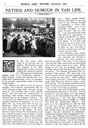
In Victorian and Edwardian Britain, lantern entertainments for welfare and other non-commercial purposes were a widespread phenomenon. Founded against a backdrop of mass poverty, social organizations offered people living in precarious circumstances a large variety of ‘respectable’ entertainments: They deemed it very important to entertain the urban poor, the working classes and the rural population while communicating social concerns or edifying messages. The Church Army was convinced that the lantern was a powerful instrument to reach out to the poor, especially working people.1 This Anglican missionary organization didn’t want “to amuse them in the ordinary sense of the word, but to instruct and elevate them by the preaching of the Gospel”.2 
To borrow the wording of The Co-operative News, the question of how social organizations “blend[ed] instruction with amusement” will be the chief concern of this article. Gleaning from press reviews, I shall examine programmes of events with lantern exhibitions in poor relief to investigate how charitable organizations managed the tension between the arrangement of lantern lectures for educative and welfare concerns and as entertainment.
How did welfare organizations arouse their audiences’ interest while delivering their messages?
My suggestion is that social organizations, exhausting all possibilities to draw audiences to their events, mainly arranged them according to popular taste and often embedded their lantern exhibitions into varied programmes with many other attractions. The term ‘programme’ has to be understood in a broad sense: The rational side of the entertainments manifested itself, maybe, less in the programmes of lantern exhibitions than in their contexts.
In order to provide a general background to these programming practices, it will be useful to begin with a brief display of the social situation in which the lantern exhibitions examined here took place.
The social context of lantern performances for charitable purposes
As a result of industrialization and rural exodus from the beginning of the nineteenth century, a large proportion of Britain’s (working) population impoverished. State measures, in particular the 1834 Poor Law Amendment Act (New Poor Law) and the foundation of the Charity Organization Society in 1869 didn’t solve the social problems.
Many non-governmental institutions, philanthropic initiatives and charitable organizations cared for poor people, self-help being usually their central principle: In order to moderate the consequences of poverty, they wanted to enable working people to take personal responsibility for their building of a stable economic existence. This utilitarian approach was also structuring the programming of lantern exhibitions and other entertainments: Being part of the attempt to establish a “reformist leisure culture”, they were to provide a ‘respectable’ counterbalance to the “popular culture” which was usually associated with poverty.7
The struggle against spiritual poverty formed an important aspect of social care. Contemporaries criticized that the public house became, especially in rural regions, the centre of leisure time. Pubs fulfilled, however, important social needs, offering “companionship, warmth, games and entertainment, and the exchange of news.” Such get-togethers were though not at all in accordance with the central Victorian cultural call for respectability.8 The Church Army was convinced that country people suffered from the lack of variety. The organization drew a direct parallel to the decreasing importance of the (Anglican) Church:
“Country life with its round of calmness and serenity, rarely ruffled by the excitements and pleasures indulged in by town dwellers, is frequently productive of a great deal of apathy in relation to religion, and apathy is often the father of adverse criticism. Not so much amongst the upper classes, who have leisure to read and draw religious inspiration from things other than outdoor sports and labours, as amongst the labouring classes, whose pleasures, after their day’s work is done, often consist in whiling away the spare hours over a pot of beer at the local inn. The men congregate in the taprooms, while their wives talk to one another across the narrow hedges which divide one cottage garden from another. And little time is left for religious influences.”9
By the mid-nineteenth century, the critics from the Church and other religious institutions had repressed traditional customs which were considered non-respectable such as bull-battling, cockfights and wrestling. Rural exodus and urban culture accelerated this process.10 Fairs and feasts which occasionally took place at church festivals were only relics of an originally very rich leisure culture.11 Instead, “the churches were becoming leisure centres with endless clusters of societies based upon sex, age, denomination and even occupation”. 12 In particular the non-conformist denominations and Temperance societies organized “recreational ‘improvements’” such as “brass bands, public recitations and lectures, lantern shows, tea festivals, railway excursions, reading clubs, temperance halls, Bands of Hope, concerts and plays”.13
Pairing education with entertainment: Lantern performances as part of varied programmes
Numerous lantern exhibitions were arranged by social organizations such as the above-mentioned Church Army, BHU, SSU and Co-operative movement, furthermore the Salvation Army, the Church of England Temperance Society (CETS) and the Clarion movement. They usually embedded lantern performances into varied programmes that included both educative and entertaining elements.
Church services, instructive addresses, Temperance lessons and socialist meetings were enlivened because they were intertwined with lantern exhibitions and other attractive features. For example, the Church Army Day on 8 October 1902 in Northampton combined religious edification with entertainment: A Prayer Meeting, Holy Communion, conference, lunch and tea in the presence of leading personalities alternated with open-air meetings, an inspection of a Mission Van, the display of magic lanterns and slides and – as the crowning conclusion of the day – an open-air lantern lecture.14 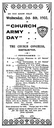
Labour organizations also provided variation to their events with lantern performances. The “New Year’s Treat for Tynesiders” in January 1896 was composed of a lantern lecture on Merrie England by William Palmer and Robert Blatchford and a dance. Putting their central ideas concerning leisure directly into practice, the Clarion men certainly won the support of their audience.16 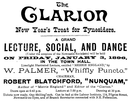


Lantern performances in multisensory programmes: Exotics and music as additional attractions
Entertainment was considered an essential part of welfare organizations’ social schemes. For the money, working people spared to pay into the church collection or the funds as shareholders of the local Co-operative society, they had to offer them something pleasant. Programmes of lantern performances were carefully arranged and provided variation to audiences. To win their support, the programmes were designed according to popular taste.
Exotics were an attraction in multisensory programmes which were both to catch the attention of audiences and to create lasting impressions. Social organizations frequently used costumes and dresses to fulfil the audiences’ want for views on distant lands.
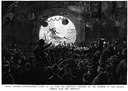
As part of multisensory programmes, these visual presentations had over several decades especially proved in Sunday school events. In 1876 was announced a lantern lecture about the Arctic expedition directed by the polar explorer George Strong Nares in 1875. A Mr. Headington from the Royal Polytechnic Institute was to lecture and an actor to “appear in a Full Arctic Fur Costume”. The audience was not only impressed by the latest views of the expedition (“Photographs of the vessels”, “Portraits of the officers and crew”, “Captains Nares and Stevenson from the last sketches received”, “Funeral of Petersen on the ice”, “Sledging Party”, “Encamping for the Night”, “Invalid on Sledge” and “Amusement on board”), but also by diverse optical effects and instruments, among others “The Chromatic Fairy Fountain”.19 This was produced by the dissolution of diverse chlorides (copper, strontian) in alcohol. Its escape by heat or strong pressure generated “the well-known beautiful effect”.20
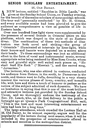
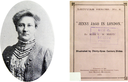
In the 1890s, costumes were permanently integrated into the SSU’s lecture scheme. The attraction of exotics could easily be combined with the telling of the Christian religion. In order to establish strong ties with audiences, expenditure on such performances could be very high. An excellent example is the living picture spectacle with costumes and décor, the SSU organized in 1890 for senior scholars at its London Headquarters (in Senior Scholars’ Classes, former scholars were trained teachers). According to the review, “every available means had been provided to give the audience as comprehensive a view as possible of life in Eastern lands”. An exhibition of biblical locations entitled “Rambles in Bible Lands”, illustrated by more than 100 slides, was intensified by actors dressed in oriental style and the transformation of the stage into an Eastern divan. In addition to projecting the slides, the lantern illuminated the performers now and then; vocal and instrumental music and solos of religious songs further accentuated the performance. The lecturer, also dressed up, was very competent in diversifying his speech and conducting the spectators through the pictures. This impressive performance served both the promotion of welfare and educative purposes, for it was organized for the benefit of senior scholars and was to be integrated into the SSU’s educative programme.21
In the 1890s, “Biblical & Oriental Lectures” became a permanent offer of the SSU’s Lecture Department. Among the illustrative objects lent to schools and associated bodies in whole Britain were “Superior Lantern Slides”, “Chinese Idols”, “Oriental Costumes” and “Cases of Curiosities”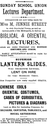
Lantern and costume illustrated lectures were very popular with audiences in the ‘Provinces’. A “well attended” lantern lecture about Palestine in a public hall (probably in Glasgow) was particularly authentic because the lecturer, a Mr. Scott from Edinburgh, had himself travelled to the Holy Land: “All of the photographs had been taken by himself and he had sought to make himself fully conversant with the places.” The question is whether the slides or the costumes were more impressive: Before the projection of slides showing Mount Hermon, Tiberias, the Dead Sea, Bethany, Jerusalem and Cavalry, “a group of seventeen young ladies and gentlemen” represented Orient regions and types, among them “a shepherd at Bethlehem”, “a Christian lady of Nazareth” and a “Lebanon Druse and wife”. The lecturer kept the balance between instruction and amusement: He gave minutious descriptions of these ‘living pictures’, but also sprinkled humorous commentaries into his lecture. The performers concluded their appearance with a “salaam” which “was greeted with a hearty round of applause”.24
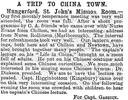
Exotics were also an attraction in events arranged by the Church Army. Lantern lectures about the organization’s social work in distant lands perfectly satisfied the audience’s rising interest in global events of the day, especially when connected to the British Empire. The Church Army’s third anniversary in North Finchley in London was celebrated with two lantern services on “India”. Both exhibitions were accompanied by “Indian choruses […] sung by young people in native costume”.25 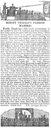
However, social organizations also cultivated – maybe sometimes even created – certain preferences. This aspect is especially revealed by the attraction of musical performances which were the central means to interact with audiences. During the nineteenth century, music played an increasingly important role in the building of communities representing a ‘respectable’ leisure culture. With their choirs, local Sunday schools resumed the musical tradition of the popular song.27 Many of the songs which were sung in Sunday school events were the national Union’s own compositions.28 “Temperance Songs” became a central element of the Band of Hope culture.29 Their members assembled in choirs, concerts, musical competitions and sometimes huge events with over 15,000 participants.30 By the beginning of the twentieth century, many workers sang in choirs or were members of a brass band. In 1900, about 20,000 amateur musicians took part in diverse musical festivals. The Salvation Army bands united 10,000 musicians.31 During the organization’s outdoor meetings, these bands loudly played popular songs in order to arouse the attention of passers-by.32 Choirs and songs also formed an integral part of labour organizations’ meetings. In the Clarion movement, the common singing was often combined with other leisure time activities: “[…] cyclists, choirs and ramblers often met up at the same Saturday or Sunday afternoon venue […].”33 Under the roof of the Clarion Vocal Union were established choirs and brass bands which sometimes arranged united concerts. In 1906 was published a Clarion Song Book, containing among others the self-composed Song of the Clarion Scout.34 The Co-operative movement also produced its own songs, for example one entitled Forward All Ye Workers. The song repertoires of both labour organizations not only referred to politics and therefore partly resembled those of religious organizations.35
Besides the slide projections, musical performances were very often one of the programmes’ main attractions. This was described by the Church Army on the occasion of its Lenten services in Birmingham in 1903: “In addition to the lantern as an extra attraction, we have been most fortunate in having a solo sung at each service by some member of our mission choir […].”36 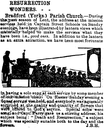
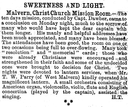
The popularity of music allowed social organizations to integrate technological innovations into their programmes: Besides live musical performances, mechanical music provided variation. At Christmas 1899 und 1900 in the Church Army Labour Home in Manchester a gramophone accompanied the lantern performance.38 

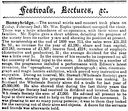
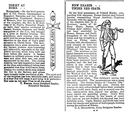
“A very profitable evening was spent with Mr. J. Lewis Young (manager, Edison’s Phonograph company) on Monday, Jan. 27th in the above school-room. Mr. Young simply and clearly explained the mechanism of the wonderful talking machine, showing it to be master of all languages, servant of all nations, the greatest marvel of science and practical utility. The lecture was illustrated with an original series of photographic slides by a powerful oxy-hydrogen lantern. Songs, music and speeches were reproduced during the evening by the phonograph.”41

Whether the music was performed live or mechanically, social organizations usually integrated well-known songs into their programmes with lantern exhibitions. Very often, audiences were encouraged to sing along. Around the turn of the nineteenth century, this was typical for whole the popular culture. The joint singing of popular songs was a common practice in the music-halls.42 Commercial films that integrated well-known airs and popular stories were much more successful than pure literary adaptions.43 Open-air lantern services 1897 in Oxford attracted large crowds because the Church Army used a part of the Anglican Church service and projected the texts of some well-known hymns on the screen: “[…] there is very great attention paid to the addresses.”44 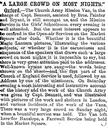
“An old friend with a new face”: Combining attractions with traditions and popular practices
“An old friend with a new face”, the title of a Church Army review strikingly describes the common programming practice of integrating ‘new’ lantern performances into well-known forms of event such as the religious service.46 
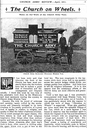
The religious service was a form of event which was well-known to everybody. Even if working people practically never went to church, they were familiar with the liturgy and Christian rituals: According to the 1851 census, there was a significant decrease in (Anglican) worshipping. Most working people, however, had been baptised, went to Sunday school, were married in church and went to the services at religious holidays or the local harvest festival.47 The Church Army, combining its mission services with lantern slides and other attractions, was able to establish its typical and in some places new media dispositif: the travelling (open-air) lantern exhibition. The Mission Vans which transported all the necessary utensils and sometimes even serving as a venue for lantern services, were part of this dispositif. They often attracted people even before they attended a Church Army meeting. 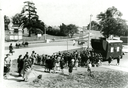
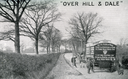
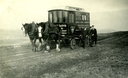

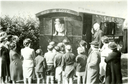

The Church Army missioners carefully planned their travelling lantern exhibitions. A detailed instruction illustrates that open-air services were arranged according to audiences’ preferences 
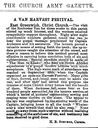
On the countryside, there had always been many occasions to get together, usually bound to the seasons or the ecclesiastical calendar. Each festival – Christmas, Shrovetide, Easter, Whitsun, the harvest festival – had its own customs, rituals and attractions. Almost everywhere people were offered feasts and the occasion for sports and other leisure activities.53 These events were “regular opportunities for affirming the bonds between households and bringing the community alive”.54
The harvest festival was a popular custom which was deeply rooted in local communities, although it had survived only in “meagre remnants of what had once existed”.55 Very often, social organizations took it as an occasion to present lantern slides. On the countryside, harvest festivals were usually initiated by the Church or Temperance societies and mostly celebrated in the form of a religious service. Clericals in the towns reverted to the custom “to build on popular sentiment and to bring some colour – and congregation – into their rather drab town churches”.56
The Church Army was convinced that lantern exhibitions in the context of a harvest festival would have lasting results. The programme of a “harvest home tea party” at the Isle of St. Helen’s consisted of a tea party, a concert, sung and violin solos and a lantern lecture entitled “A journey through the Holy Land”, followed by a collection, prayer and common singing. 300 attendants and profits of £13 which the author of the reports regarded as successes of the entertainment point to the persuasive power of such events which combined innovations with traditions.57 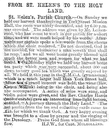

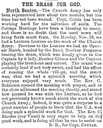
Social organizations often combined their ‘new’ lantern performances with processions. These were often a means to ‘pick up’ people from the street. The march would lead them to a meeting which offered them more information – and very often a lantern exhibition: Many people who spontaneously took part in a procession, became recipients of a screen entertainment. 1895 in North Seaton, three Church Army missioners headed a procession, playing a drum, a trombone and a cornet, with “the effect of rousing the whole village”. By this means, local people were attracted to “a Lantern Lecture on the work of the Church Army”.59
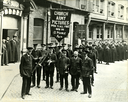
Processions were a very popular custom which perfectly suited the concept of a respectable culture. As in the case of the music it is obvious that social organizations sometimes steered audiences’ preferences. For example, the traditional Whit Walk was revived by Sunday schools at the beginning of the nineteenth century and served in the first place a ‘counter-attraction’ to keep villagers from ‘non-respectable’ customs (animal battles, blood sports). However, the Whit Walks gradually became “an ingrained part of working-class culture”.60
In many cases, processions were probably also organized to attract those people that not immediately joined them. A Church Army children’s afternoon service in Henley-on-Thames was composed of a march and a tea party, both accompanied by a brass band which made – “as it is a thing very rarely heard in this part of the country” – some of the children dance. The peak of delight was attained with the lantern exhibition of “the comical magic lantern story of the chimney sweeper and the whitewasher” (possibly The comical whitewasher, UK, W. Rider & Co., n.d./latest possible 1897). These elements of the event, seeming purely entertaining at first glance, also contained instructive components. The procession and the tea party placed the lantern performance in a well-regulated setting. The slide set, though comical, was of educative content, indicating that bad behaviour was caused by drink. Besides this, the procession, which bore mottos such as “Onward, Christian Soldiers” and “God bless our Children” on the banners, crossed the entire parish and certainly caught the adults’ attention. Obviously, this was not only part of the entertainment for children, but was meant to appeal to their sense of responsibility towards their offspring. Perhaps the chance of being entertained themselves would open their minds to religion and Temperance principles.61

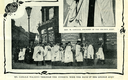
Labour organizations also organized huge marches to arouse the interest of spontaneous participants which would be entertained to lantern slides afterwards. Sometimes, this was to counteract the dominant political and social discourse. On the occasion of King Edward’s coronation, the Silverdale Co-operative Society didn’t participate in the local festivities, but organized a treat for the members’ children. Headed by the “Silverdale Town Prize Band”, a march led them through the town centre and then to the Public Hall. After a tea party, the more than 1,000 children were entertained for two hours to a lantern and cinematograph exhibition in the course of which the lecturer, a Mr. Ryan of the Co-operative Wholesale Society (CWS), taught the children “co‑operative ditties which the children sang lustily”.62
The Salvation Army sometimes combined popular customs with the attraction of exotics to give their spectators an idea on its work in distant lands. For example, a procession 1908 in Heeley took place during the local harvest festival: “Hundreds of interested people followed the march, which was succeeded by a lantern service on Japan.”63 Against the backdrop of the international arms race, the Anglo-Japanese alliance entered in 1902 and the Russo-Japanese War dating back only a couple of years, this was a very interesting subject for audiences.64 They were, however, attracted already during the procession when Salvation Army soldiers and musicians represented different nations such as India, Ireland, Switzerland and Turkey.65
Salvation Army workers often dressed up for processions to arouse the interest of passers-by. “A march in Indian costumes” in Guildford assembled, for example, “a good audience”. At the “Salvation Meeting” which was taking place afterwards, an Ensign Graham lectured with lantern slides on “The Army’s work in India”.66
Realizing the programme: Lecturers and audiences as main performers of lantern exhibitions
Lecturers were often not only responsible for the commentaries accompanying the slides, but for other programme parts and the smooth running of the programmes of lantern performances. According to a report in The Co-operative News, a Mr. Bedford Pollard who lectured during a “magic lantern and cinematograph entertainment” in the C.W.S. Printing Works in Longsight on “An Eighty Miles’ Tramp Through Yorkshire”, was “quite cosmopolitan in his work as lecturer, conductor, and participant in the vocal part of the evening, and also as leader of the choir”.67

Social organizations considered the combination of instruction and distraction within the programme to be an effective means of opening people’s minds up to their concerns. But in order to popularize these shows, the performances were crucial: To regulate the course of their lantern exhibitions, welfare organizations not only supplied slides and technical equipment, but also lecturers (as well as operators and readings, including the issue of lists of professionals who had specialized in welfare topics). The use of reliable staff was an effective instrument of realizing the programme of lantern performances. For example, the CETS provided, in addition to the technical equipment and lantern slides, speakers “for Temperance Missions” that might last for several weeks.68 Furthermore, it advertised the services of the “premier C.E.T.S. Entertainment Provider”, Edward Longstaffe, who was obviously reliable in providing “Entertainments […] of the right kind” for more than 20 years.69 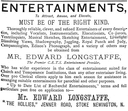
Social organizations regarded the lecturer the main instance to win their audiences’ trust. Lantern lectures based on personal experiences and composed of documentary views which the lecturers often had photographed themselves emphasized the authenticity of the lecture – within of the organizer. According to The Co-operative News, they were very popular with audiences. A Mr. William Diggle who lectured with lantern slides on “The Sunny Side of Ireland” in Bury District, “took his hearers on a tour through the south of Ireland”. Being familiar with the country and its people, he captivated his audience with “racy stories of Irish wit and pleasantry”.71 
A reliable lecturer had to know how to spontaneously ‘save’ the programme of a lantern exhibition when something went wrong. In the village Ashe in Hampshire, a Church Army Captain Wilson received the slide set entitled “The Gipsy Girl and the Dying Saviour” (probably The dying Saviour and the gipsy girl, UK, Bamforth, 1894) without a reading – only one hour ahead of the exhibition. In the following, he had to improvise. This, however, not dampened the audience’s spirits:
“[…] the gallant captain (though he did not know the story) [...] set to work to study the slides carefully, one by one, with the result that he gave a most interesting lecture, and made up the story as he went on; whether it was the right one or not, nobody ever knew! [...] Evidently, the good captain only recognises difficulties as things that have to be got over somehow! God bless and prosper him!”73
The programmes of such events with lantern performances were much based on audience participation, too. Social organizations usually encouraged their spectators to join in the exhibitions. Taking part in processions, common meals, tea parties and feasts, and joining in the songs which accompanied the projections on the screen, audiences actively participated in the event – and directly communicated with the performers on the stage.
Sometimes, audiences even were the main performers of the programme. Social organizations often planned stage entrances of their members, usually children. Co-operative children publicly performed the service of song “Maggie’s Help” in March 1903 in the village of Stillington.74 

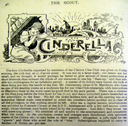
Social organisations also encouraged spontaneous audience interaction. “Magic lantern, songs (humorous, with popular chorus), and a quadrille band” were on the programme of a Cinderella, the Independent Labour Party organized in Liverpool in 1896. At the music, the children 125 poor children spontaneously danced and played musical chairs.77 The lantern entertainment at a treat of the Arsenal Co-operative Society for junior members in 1890 included among others the exhibition of a slide of “a man who had awoke in the night and began swallowing rats with great gusto” (probably the Man Swallowing Rats, UK, slide 16 of comic movable slides, n.d./latest possible 1897) and a lantern illustrated song called “The Death of Cock Robin” (Death of Cock Robin, UK, maybe the Newton & Co. version, n.d./latest possible 1888). This was obviously a well-known piece which the children immediately recognized and joined in. Thereupon, the singer spontaneously initiated a singing competition between the girls and the boys. Lantern views of volcanoes and a Cornish mine then interspersed with “a musical interval”. At “some very pretty and well-known pieces on the piano”, the children felt again the appeal to join in: “some [...] tickled the fancy of the juvenile audience so much that they were obliged to show off their musical abilities with their voices, to the consternation, I fear, of some of the adults!”78
In co-operative events, interaction often took place in form of discussions. This was sometimes even the case in assemblies for children. For example, some of the 5000 children who attended the second part of a “‘liliputanian’ gathering” of the Preston Society in 1904, contributed to the programme by talks on “free food policy.”79
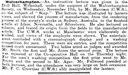
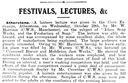
Ludic forms of interaction were also common in co-operative programmes. According to the reports, instructive and amusing parts were always balanced. Between 1908 and 1913, there was organized a large-scale advertising campaign including events with lantern lectures on co-operative products such as wheat, chocolate, tobacco and soap. 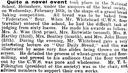


Conclusion: Programming practices between ideals and demands
Enjoyment in British lantern exhibitions by no means contradicted charitable aims and was considered necessary in order to educate people, including adults. Social organizations regarded the combination of instruction and distraction within the programme to be an effective means of opening people’s minds up to their concerns. In the planning of their events, they considered audiences’ preferences: They created multisensory entertainments which encouraged their spectators to participate.
Social organizations provided variety to their audiences. This mainly meant the juxtaposition of instructive and amusing programme parts. Simultaneously, they combined their lantern performances with elements which proved especially attractive and even fascinating to audiences. Lantern lectures on exotic lands illustrated by costumes and dresses both referred to contemporary global history and as such met with audience preferences and were suitable to teach, for example, Bible history and inform about social organizations’ overseas activities. Musical performances were a more common, but not less impressive part of programmes with lantern exhibitions. Apart from the singing of well-known songs, social organizations extensively instrumented their events and utilized the phonograph to attract their audiences.
The programming of ‘respectable’ entertainments extended, however, to their contexts. Social organizations didn’t always have to emphasize their lantern exhibitions’ instructive purposes because their combination with religious services, processions and the traditional harvest festival already placed the programmes into an instructive frame. As we can see from Church Army travelling lantern exhibitions, these organizations were instead able to satisfy popular taste, including the attraction of novelties/modernity and new performance practices. Obviously, it was sometimes exactly the educative context which attracted audiences to social organizations’ lantern exhibitions.
Instructive purposes and contents were conveyed to audiences in a subtle way. The performers and especially the lecturer were responsible for realizing – and regulating – the programmes. Last but not least, audiences themselves contributed to the performances. Therefore, maybe, they received educative programme parts almost incidentally and willingly supported welfare causes. Perhaps spectators were not always fully aware that these entertainments mainly pursued persuasive intentions.
Indeed, questions remain concerning the correlation between attraction and instruction. How did spectators experience the connection between education and entertainment? Which aspect was felt to be more important to them? Was there a gap between the claim for creating respectable entertainments and their actual practice?
Probably it is too simple to reduce the social organizations’ utilitarian programming practice to a ‘balancing’ of “instruction and amusement”. Though it is clear that their entertainments pursued non-profit purposes and that welfare aims were always communicated, we can assume that the possibilities of combining instruction with amusement were as much varied as the programmes.
In view of the increasing recreational opportunities working people were able to afford by the end of the nineteenth century, this latter point becomes even more significant. Were audiences as much attracted to social organizations’ lantern exhibitions as it was claimed in their reports? According to social historians, they were under rising pressure to extend their activities. Considering entertainments needs of their target groups, they aimed at winning sympathizers and (potential) supporters: “There was a tension between the desire to propagate an ideology and the need to maintain membership. […] it was a necessary condition for their survival.”82
Maybe the balance between instructive and amusing parts was just postulated and in practice not necessarily desired. Was the programming of events with lantern exhibitions for educative and moral purposes consequently based on a compromise, a means for reaching out to working people at all? The use of lantern slides as a pure attraction points to that. The journalist and publicist W. T. Stead criticized that the SSU had “not grasped as yet, any more than the Churches, the possibility of utilizing the lantern for the systematic study of the whole Bible […] the lantern is used as a lure to other services.”83 The Church Army openly considered lantern performances “as a bait to entice people”: “for the more who come to hear the old Gospel story the more successful is the mission […].”84

- ^ See, for example, The Church Army Gazette. A Church Gospel Paper for the Working Man (CAG), no. 497 (28 March 1894): 6.
- ^ G.H.N., “Pathos and Humour in Van Life”, Church Army Review (CAR) (December 1907): 8-9, here 8, right column.
- ^ The Band of Hope Chronicle (BHC) (June 1885): 87.
- ^ The Sunday School Chronicle (SSC), vol. 6 (3 November 1876): 280.
- ^ The Co-operative News (CN), vol. 35, no. 10 (5 March 1904): 273.
- ^ CN, vol. 24, no. 26 (1 July 1893): 728.
- ^ Hugh Cunningham, “Leisure and Culture”, in: Francis Thompson (ed.), The Cambridge Social History of Britain 1750-1950, vol. 2: People and their Environment (Cambridge: Cambridge University Press, 1990), 279-339, here 299.
- ^ Robert Malcolmson, “Leisure”, in: Gordon Mingay (ed.), The Victorian Countryside, vol. 2 (London: Routledge and Kegan Paul, 1981), 603-615, here 610.
- ^ Everard Wyrall, “The Church on Wheels”, CAR (April 1911): 3-5, here 3
- ^ See Malcolmson, “Leisure”, 613-614, and Edward Royle, Modern Britain. A Social History, 1750-2011 (London, New York 2012), 285.
- ^ Malcolmson, “Leisure”, 610.
- ^ Robert Morris, “Clubs, Societies and Associations”, in: Francis Thompson (ed.), The Cambridge Social History of Britain 1750-1950, vol. 3: Social Agencies and Institutions (Cambridge: Cambridge University Press, 1990), 395-443, here 420-421.
- ^ Malcolmson, “Leisure”, 612.
- ^ CAG, no. 940 (4 October 1902): 3.
- ^ CAG, no. 914 (29 March 1902): 6.
- ^ See Clarion (CL), no. 212 (28 December 1895): 412.
- ^ CL, no. 460 (29 September 1900): 312.
- ^ The Holmfirth Express (HE), no. 906 (26 March 1904), n.p.
- ^ SSC, vol. 6 (1 December 1876): 358. For the pioneering role of the Royal Polytechnic Institute, see Jeremy Brooker, The Temple of Minerva: Magic and the Magic Lantern at the Royal Polytechnic Institution, London, 1837-1901 (London: The Magic Lantern Society, 2013).
- ^ English Mechanic and Mirror of Science, vol. 11 (15 July 1870): 405.
- ^ SSC, vol. 20 (14 March 1890): 132.
- ^ SSC, vol. 27 (23 September 1897): 558.
- ^ HE, no. 695 (10 March 1900): n.p. The Lawson Saturator, invented in 1892, was the first saturator to be put into the lantern. The benefits were, among others, an increased safety, a cheaper price and a very strong luminosity of the projected pictures. See W. Lawson, “A New Saturator which is placed in the Lantern”, Optical Magic Lantern Journal and Photographic Enlarger, vol. 3, no. 36 (1892): 52-53.
- ^ Scottish National Sabbath School Magazine, vol. 51, no. 1 (1899): 339.
- ^ CAG, no. 906 (1 February 1902): 6.
- ^ CAG, no. 899 (14 December 1901): 6.
- ^ See Peter Bailey, Leisure and Class in Victorian England. Rational Recreation and the Contest for Control, 1830-1885 (London: Routledge and Kegan Paul, 1978), 46.
- ^ West London Auxiliary SSU, The Eighty-Second Annual Report of the West London Auxiliary SSU (London, 1896), n.p.
- ^ Charles Wakely, Hints and Helps. A Manual of Incidental Temperance Teaching (London: BHU Publishing House, 1908), 213.
- ^ See Lilian Shiman, Crusade Against Drink in Victorian England (Basingstoke: Macmillan, 1988), 141-142.
- ^ See Nicholas Temperley, “Bands and Band Music”, in: Sally Mitchell (ed.), Victorian Britain. An Encyclopedia (Oxon, New York: Routledge, 2011), 63. For the general importance of music in Victorian Britain, see Pamela Horn, Pleasures and Pastimes in Victorian Britain (Stroud: Amberley, 2011), 223-257.
- ^ See Dirk Gnewekow and Thomas Hermsen, Die Geschichte der Heilsarmee. Das Abenteuer der Seelenrettung. Eine sozialgeschichtliche Darstellung (Opladen: Leske + Budrich, 1993), 59, 72.
- ^ Denis Pye, Fellowship is Life. The National Clarion Cycling Club, 1895-1955 (Manchester: Clarion Publishing, 1995), 48.
- ^ Ibid., 49.
- ^ See Dave Russell, Popular Music in England 1840–1914: A Social History (Manchester, New York: Manchester University Press, St. Martin’s Press, 1997), 62.
- ^ CAG, no. 975 (30 May 1903): 6.
- ^ CAG, no. 973 (16 May 1903): 6.
- ^ CAG, no. 800 (20 January 1900): 6; no. 853 (26 January 1901): 6.
- ^ CAG, no. 942 (11 October 1902): 6; no. 945 (1 November 1902): 6.
- ^ CN, vol. 31, no. 6 (10 February 1900): 126.
- ^ SSC, vol. 20 (31 January 1890): 58.
- ^ See Michael Chanan, The Dream That Kicks (London: Routledge and Kegan Paul, 1980), 149; Frank Scheide, “The Influence of the English Music-Hall on Early Screen Acting”, in: Linda Fitzsimmons and Sarah Street (eds), Moving Performance. British Stage and Screen, 1890s-1920s (Trowbridge: Flicks Books, 2000), 69-79, here 70-71.
- ^ See Charles Musser, “Die Nickelodeon-Ära beginnt. Zur Herausbildung der Rahmenbedingungen für den Repräsentationsmodus Hollywoods”, KINtop, vol. 5 (1996): 13-36, here 15.
- ^ CAG, no. 673 (14 August 1897): 6.
- ^ a, b The Scout, vol. 2, no. 2 (1896): 46.
- ^ CAG, no. 920 (10 May 1902): 6.
- ^ See James Obelkevich, “Religion”, in: Thompson, Social History of Britain, vol. 3, 337-340.
- ^ CAG, no. 729 (10 September 1898): 6.
- ^ See CAG, no. 880 (3 August 1901): 3.
- ^ CAG, no. 995 (17 October 1903): 7.
- ^ Jane Tynan, British Army Uniform and the First World War: Men in Khaki (Basingstoke, New York: Palgrave Macmillan, 2013), 4. Also see in this book pages 5 and 66-68.
- ^ CAG, no. 995 (17 October 1903): 7.
- ^ See Malcolmson, “Leisure”, 603-604.
- ^ Peter Borsay, A History of Leisure. The British Experience Since 1500 (Basingstoke: Palgrave Macmillan, 2006), 134.
- ^ Malcolmson, “Leisure”, 608.
- ^ Royle, “Modern Britain”, 285.
- ^ CAG, no. 843 (17 November 1900): 6.
- ^ CAG, no. 891 (19 October 1901): 6. See “Slide set: My mother’s Bible (service of song: Bamforth & Co., 21-31 slides, 1895)”, Lucerna Magic Lantern Web Resource, https://www.slides.uni-trier.de/set/index.php?id=3001114 (accessed 31 August 2017).
- ^ a, b CAG, no. 587 (14 December 1895): 6.
- ^ Royle, “Modern Britain”, 285.
- ^ a, b a, b CAG, no. 491 (21 February 1894): 6. See “Slide set: The comical whitewasher (story: W. Rider & Co., 9 slides, n.d.)”, Lucerna Magic Lantern Web Resource, https://www.slides.uni-trier.de/set/index.php?id=3004310 (accessed 27 September 2017).
- ^ CN, vol. 33, no. 38 (20 September 1902): 1147.
- ^ War Cry (WC), no. 1679 (19 September 1908): 7.
- ^ See Hugh Cunningham, The Challenge of Democracy: Britain 1832-1918 (London, New York: Routledge, 2001), 222, and for the Anglo-Japanese alliance: Denis Warner and Peggy Warner, The Tide at Sunrise: A History of the Russo-Japanese War, 1904-1905 (London, Portland: Frank Cass, 2002), 126-136.
- ^ WC, no. 1679 (19 September 1908): 7.
- ^ WC, no. 1856 (17 February 1912): 7. See also further reports on lantern lectures combined with parades in this journal: no. 1656 (11 April 1908): 6; no. 1758 (26 March 1910): 6.
- ^ CN, vol. 41, no. 12 (19 March 1910): 375.
- ^ The Church of England Temperance Society, 31st Annual Report, for the Year Ending December 31st 1892 (London, 1893), 148.
- ^ Ibid., 143, The Church of England Temperance Chronicle (CETC), vol. 15, no. 8 (19 February 1887): 108, vol. 37, no. 6 (5 February 1909): ii.
- ^ Albert Mansbridge, “A Monthly Educational Causerie”, in: CN, vol. 38, Special Educational Supplement, no. 2 (30 November 1907): 13, left column.
- ^ CN, vol. 31, no. 9 (3 March 1900): 221.
- ^ CN, vol. 33, no. 9 (1 March 1902): 245.
- ^ CAG, no. 810 (24 March 1900): 6. See “Slide set: The Gipsy Girl and the Dying Saviour (service of song: Bamforth & Co., 29-34 slides, 1894)”, Lucerna Magic Lantern Web Resource, https://www.slides.uni-trier.de/set/index.php?id=3001055 (accessed 31 August 2017).
- ^ CN, vol. 34, no. 13 (28 March 1903): 378. The report mentions a Miss Mayo as the lantern lecturer. Catherine Mayo was not only a lecturer and author of lantern lectures, she was also a Secretary of a new Women’s Guild Branch in her home town Huddersfield and a Women’s Guild Organiser and Council member. See Margaret Davies, The Women’s Co-operative Guild. 1883-1904 (Kirkby Lonsdale, Westmorland: The Women’s Co-operative Guild, 1904), 42.
- ^ CN, vol. 33, no. 43 (25 October 1902): 1308.
- ^ CAG, no. 645 (30 January 1897): 6.
- ^ The Scout, vol. 2, no. 2 (1896): 46.
- ^ a, b CN, vol. 21, no. 1 (4 January 1890): 20-21. See “Man Swallowing Rats, Slide 16 of [Comic movable slides] (comic: maker unknown, 78 slides, n.d.)”, Lucerna Magic Lantern Web Resource, https://www.slides.uni-trier.de/slide/index.php?id=5085242, and “Slide set: Death of Cock Robin (story: Newton & Co., 14 slides, n.d.)”, Lucerna Magic Lantern Web Resource, https://www.slides.uni-trier.de/set/index.php?id=3005263 A lantern illustrated poem entitled The death of Cock Robin was obviously already distributed in the early 1870s: “Text: The death of Cock Robin in Lectures for the magic lantern [etc.] (1872)”, Lucerna Magic Lantern Web Resource, https://www.slides.uni-trier.de/text/index.php?id=4003499 (all accessed 31 August 2017). For an analysis of the event with lantern exhibition of the Man Swallowing Rats by the Liberal Fulham Liberal Club and Institute, see Ludwig Vogl-Bienek, Lichtspiele im Schatten der Armut: Historische Projektionskunst und Soziale Frage (Frankfurt am Main, Basel: Stroemfeld, 2016), 52-55.
- ^ CN, vol. 35, no. 4 (23 January 1904): 103.
- ^ CN, vol. 40, no. 48 (27 November 1909): vii.
- ^ CN, vol. 40, no. 44 (30 October 1909): 1436.
- ^ Hugh Cunningham, “Leisure and Culture”, 330.
- ^ William Stead, “The Magic Lantern Mission”, Review of Reviews, vol. 2, no. 12 (1890): 561-567, here 563.
- ^ CAG, no. 925 (7 June 1902): 6.