Apparatus

Introduction
Across the 19th century, advances in the techniques used by lantern showmen, changes in the construction and optical systems of the lantern itself, and the growing industrialisation of lantern and slide manufacture, brought the magic lantern into its most widespread and diverse use for both entertainment and education. The 19th century became a golden age for the magic lantern, the century in which the lantern's ability to communicate and ubiquitous presence throughout society brought both recognition and prominence. From simple toy lanterns for children costing as little as a few pennies to the splendid mahogany and brass triunial lanterns of professional lecturers, the magic lantern became available in every possible size and shape. A lantern was available to fit every budget, and could be outfitted with elaborate decorative or mechanical accessories. Four principal developments, in addition to the global spread of the Phantasmagoria show of the 1790s amongst professional showmen, discussed in a separate article, drove the magic lantern into widespread use across the whole of the 19th century: 1) the use of improved sources of illumination such as the Argand lamp and limelight burners to power the projected image, 2) the technique of "dissolving views" as a pictorial and narrative device for public exhibitions, 3) the impact of photography and photographic slides on magic lantern practise, and 4) the introduction of the paraffin (kerosene) fuelled Sciopticon lantern by E. J. Marcy in 1871.
Parallel to all of this activity, much of it concentrated in the second half of the century, there were also in an age considered the second industrial revolution any number of individual experiments and craftsman inventions that provided unique and sometimes extraordinary diversions from the mainstream of lantern development. This was truly the century of the magic lantern, an era when the projected image began to emerge across all levels of society in a way that foreshadowed its dominance of the public arena in our own time through the invention of moving pictures and the wider dissemination of images through television, computers, mobile phones, and the digital world.
Surviving lantern practise: the Dutchess of Wellington, Timothy Toddle, and Johann Wolfgang von Goethe
Although both lantern construction and techniques of showmanship advanced dramatically after 1800, many earlier practices lingered on in the first decades of the 19th century, with both amateur and professional lanternists applying simple oilburning lanterns to uses well-established in previous decades. Well within the 18th century tradition of upper class use of the magic lantern for amusement, in August 1816 the Dutchess of Wellington arranged to have a member of the London firm of philosophical instrument makers Watkins and Hill call upon her at home; their order book entry indicates the results of the visit, including the purchase of a lantern for 8 Shillings and 4 Pence: "Her Grace the Duchess of Wellington, to have always [a] Magic Lantern 8/4 [with] 8 large black slides, 6s each, 6 moving [slides] 2/6 each, 2 moving slides 7/6 each to replace a small lantern & send some black slides for Her Grace's choice."1 This purchase record implies that the Dutchess and either her family or guests had long enjoyed private lantern shows, either at their sumptuous London home, Apsley House at Hyde Park Corner, or at their country estate Stratfield Saye House near Reading.
The lingering lantern shows of an earlier age are easily seen in the survival of a unique script for an itinerant lanternist who introduced himself as "Timothy Toddle" and presented an eclectic show that has been dated to about 1841-2.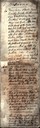


One eminent literary figure engaged by the magic lantern was the writer Johann Wolfgang von Goethe, who recorded in his diaries for Autumn 1807 the after-dinner entertainments he attended at the home of a friend, the Jena publisher Carl Friedrich Johannes Frommann. A day that began with Goethe noting "much imagined and prepared" ended with "Afterwards to Frommann's. The magic lantern produced."3 A month later he was again at Frommann's along with the teacher and physicist Johann Seebeck plus the teenaged daughters of the academic August Seidler, where the magic lantern evidently contributed to an entertaining evening: "Played and sang for a while, and the magic lantern produced."4 When Prince Radziwill organized a private production of excerpts from the unfinished Faust in Berlin in 1819, the appearance of the Earth Spirit was accomplished by using a phantasmagoria lantern. According to a letter of Count Brühl to Goethe, "Through the back window, which was painted transparent, came not just the moonlight described earlier, but also the appearance of the Earth Spirit, of which only the colossal head was seen, which took on a height of four feet."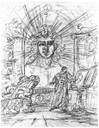
New illumination for the lantern: the Argand lamp
Each of the two new types of illumination which came into widespread use for the magic lantern in the early 1800s directly influenced lantern design and practice, while older types of lanterns and simple oil lamps continued to be used by both itinerant showmen and noble amateurs. The ability to project bright images that had an impact on a larger audience than an assembled household or small group of students first arrived with the development and widespread use of the Argand lamp in the 1780s, the first decisive improvement in lighting illumination for over a century. The introduction of even more powerful limelight illumination in the 1830s gave professional lanternists for the first time a source of light that could be used in the largest public halls, and led to the design of elaborate lantern apparatus that was fully capable of providing a startling range of pictorial effects in the hands of a sophisticated projectionist. Both types of illumination were invented by experimenters who for the first time were considering the nature of combustion itself rather than tinkering with the type and composition of the fuel used in the traditional oil lamp.
François-Pierre-Ami Argand's lamp was initially developed to provide better illumination for a distillery in Valignac, near Montpellier, where the young student of physics and chemistry had introduced radical new methods of producing Eaux-de-Vie from wine. Over a long period of development between 1780 and 1784, when manufacture of an improved lamp was begun in Britain by the partnership of Argand and the London chandelier maker William Parker at the factory of Matthew Boulton near Birmingham, Argand had discussed his lamp in detail with many interested parties in both France and England, and had additionally been diverted from concentrating on the commercial development of his invention by his deep involvement in the startling balloon experiments of his Montpellier friends Etienne and Joseph Montgolfier. Producing more than double the amount of light of simple oil lamps, about 28 to 35 candle power with a reflector,6 the Argand lamp was designed with a new type of circular wick so that air circulated freely both inside and outside the burning flame, producing more efficient and more intense combustion and therefore more light.
The impact of this type of lamp on illumination in homes and public spaces was revolutionary: as one encyclopaedist wrote in 1819, remarking on not just the poor combustion of ordinary lamps but the ancillary issues that accompanied it, "the evil arising from the smoke and smell of lamps was formerly so great as to prevent their introduction into domestic life, notwithstanding the strong inducement of convenience and economy... .This invention embraces so many improvements upon the common lamp and has become so general throughout Europe that it may be justly ranked among the greatest discoveries of the age."7
First used in magic lantern work for the phantasmagoria show in the 1790s, the practical new illuminant spread to redesigned models of projection lanterns in the early 1800s, where because of its strong heat it required lamphouses of larger dimension, at first made entirely of metal and later sometimes made of a wooden exterior lined in metal. The strongly burning flame of the Argand lamp also required a larger open lantern chimney that was bent twice to reduce the amount of extraneous light escaping from the lantern, and early models adopted the "blackout" chimney developed for the Phantascope used in rear-projection.
These early 19th century metal lanterns have generally come to be called Phantasmagoria lanterns after their distinctively shaped chimneys, but the term is something of a misnomer. They were certainly suitable for use as a second projection source in phantasmagoria presentations, or as the primary projector in simple home exhibitions of that type, but it is clear that it was solely the Argand burner that denoted the label "phantasmagoria lantern," as illustrated by a surviving catalogue of the London philosophical instrument makers Watkins and Hill from 1832, who sold lanterns of identical shape and design labelled "magic lantern" when supplied with a simple oil lamp, and called "phantasmagoria lantern" when equipped with an Argand lamp.8
New illumination for the lantern: Limelight
The second new illuminant, limelight, also briefly changed lantern nomenclature, giving birth to the Oxy-Hydrogen Microscope, "a valuable instrument of public exhibition" which apart from its brilliant illuminant "nearly resembles the magic lantern",9 as a specialist projection device allowing the projection of microscopic subjects.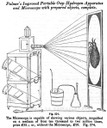
Based on the long-recognized phenomenon that a piece of lime glows brightly when heated in the intense flame produced by burning a pure mixture of oxygen and hydrogen, limelight as a source of illumination came of age in 1825 when, within a few weeks of each other, Lieutenant Thomas Drummond of the British Army demonstrated that artificial limelight could be seen at night from just over 66 miles away, and George Birkbeck used limelight to produce a spectrum and to explain the solar microscope during a lecture at the London Mechanics' Institution. While the possible applications of a light "not unlike daylight in its appearance"10 were quickly recognised, the significant danger of explosion from burning a combination of hydrogen and oxygen meant that limelight became a practical source of bright light only in specialized circumstances: coastal lighthouses, theatrical lighting, scientific demonstrations, and professional lantern projections.
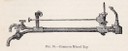
Explosions, either caused by the flame burning into the supply tubes and igniting the supply of gas, or by the accidental mislabelling or mixing of the separate tanks of oxygen and hydrogen, seem not to have been frequent occurrances but were a widely-recognized hazard: making oxygen for his lantern show at Northwich Town Hall in the winter season of 1852-3, showman George Sanger's retort exploded and seriously injured himself and his wife; the walls of his caravan were blown out and the explosion heard over a mile away.11 At first, like the lantern that Birkbeck's 1825 associate Charles Woodward had "long used", as he reported in 1851,12 a limelight burner was simply installed inside the roomy lamphouse of a larger metal Phantasmagoria lantern. Driven by the usefulness of the new illuminant for lantern exhibition in larger halls, mid-century inventors and manufacturers sought ever-safer and more portable designs that would supply limelight without fear of explosion or fire, and lantern manuals from the 1870s to the close of the century often devote a third or more of their pages to the variant ways of producing, controlling, and safely employing limelight burners.13
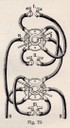
Because the intensity of the glowing limelight could be controlled with some precision by varying the heat of the flame focussed upon it, by using valves in the gas supply to change the mixture of gas supplied to the point of ignition, limelight illumination proved especially practical for exhibiting dissolving views, surpassing the mechanical shutters originally used for this illusion. As one result, it was limelight that from the 1850s encouraged the production of biunial (two-stage) and later triunial (three-stage) lanterns which in their statuesque mahogany cases and filigree brass lens tubes became a powerful symbol of the public showman's elegance and status.
The Era of Dissolving Views
At the beginning of the nineteenth century, between the elaborately mounted theatrical illusions of the Phantasmagoria show and the opportunistic streetcorner and parlour exhibitions of the itinerant lanternists, there was a vast empty space, and, by implication, an equally vast audience. lt would be the dissolving view lantern show, with its double lanterns and specially-painted slides, that filled this space for the first time and gave the lantern ist a new opportunity to become an independent, professional showman. Until this transformation took place, about three decades into the century, only the Phantasmagoria show and a few scattered lantern experiments, like the one of Goethe, took advantage of the increased illumination of the Argand lamp to put images projected by the magic lantern to new uses.
The precise beginnings of the practise of dissolving one image seamlessly into another without interruption by a moment of darkness or any sudden changes apparent on the screen, are obscured in the fog of secrecy that showmen cast over their work. What is clear is that early in the 19th century descriptions of a new effect began to appear in accounts of magic lantern shows. One of the last exhibitions of Paul Philidor, who established the first Phantasmagoria show in Paris and then became London's first Phantasmagoria showman as well opened in London on 3 February 1812 and was described by one reporter as "a series of landscapes (in imitation of moonlight), which insensibly change to various scenes producing a very magical effect."14 A decade later in March, 1827 the phantasmagoria exhibitor M. Henry opened a new at the Theatre Royal in London's Haymarket, where his optical pictures were described as a "series of views which seem to dissolve into each other. Introduced last year, but much improved."15
In the same season of 1827 Henry Langdon Childe began to exhibit "Magic Views", which were heralded as transformations that had been "originally introduced by him, at incredible expense and are totally different to any of the party imitations that they have given rise to."16 Childe was a lantern slide painter of great skill who was later prominent in the management of the Royal Polytechnic Institution in London, amongst whose many exceptional lantern ists and lecturers he was considered without dispute to be the inventor of dissolving view technique. Whatever the cautious evolution of the effect, it was certainly Childe, supported by his outstanding skill as a lantern slide painter, who perfected the classical dissolving view exhibition, combining two lanterns and using specially painted slides. His 1827 Adelphi Theatre exhibitions included "the eruption of Vesuvius, storm with shipwreck, mill scene with effect of a rainbow and various moonlight scenes", plus "Newstead Abbey.. with moving swans etc."17 This exhibition was already using specific themes that would remain in the repertoire of the dissolving view show through the end of the century.
Early dissolving view lanterns were normally called "Phantasmagoria Lanterns", because of their use of Argand lamps and their association with public exhibitions. Carpenter & Westley were important suppliers of these new style lanterns from around 1820, and their parallel introduction of a new type of slide, the copper-plate slider produced by etching an outline of the subject on the glass before hand-colouring, indicated their intent that the more powerful lantern was for use in lecture halls and other larger rooms. The London firm of Watkins and Hill sold Phantasmagoria lanterns from at least 1832, where they were described as having "the power of producing more imposing effects than the magic lantern",18 which was also included in their catalogue. The phantasmagoria lantern was clearly meant for public performances, as the catalogue description stated "...it can be made the source of much wonder and amusement to a large assemblage of persons."19 Four of the five models of dissolving lanterns sold by Watkins and Hill were pairs of their Phantasmagoria apparatus outfitted with a hand-cranked, geared shutter system to produce the dissolve effect,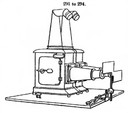
When dissolving views began to be widely used by magic lantern showmen in the decade of the 1840s, they immediately established a new standard of magic lantern practise. The magic lantern now participated in an existing, broadly-based enthusiasm for transformational pictures that had been launched at the beginning of the century with both the meticulously constructed transforming images based on light and transparency produced by Karl Friedrich Schinkel in Berlin, as well as the theatrical illusions of the Diorama invented by Louis Jacques Mand6 Daguerre. Beginning at Christmas 1807, Schinkel, who was later a noted architect, exhibited in a room in the house at Nr. 16 am Spittelmarkt large transparent paintings of about 4 by 7 meters, lit alternately from the front and from behind. Spectators stood about 30 feet away and watched saw the paintings slowly transform in the distance through a long darkened colonnade built in deceptive perspective; a choir sang backstage to set the mood. In 1811 Schinkel exhibited a painting of a gothic cathedral next to a river; the scene was lit from behind by a rising sun. The sun was represented by a light behind the painting, which at first grew in intensity and then rose in a manner Text imil r to the Si in.iSchinkers pictures attracted huge crowds, and he produced 40 illusions between 1807 and 1816, including representations of St. Peter's church in Rome, Mount Vesuvius erupting, the Cathedral in Milan, and a typical 'Swiss village in the morning sunshine at the foot of Mont Blanc.20
All of these subjects were later in the standard repertoire of the magic lantern dissolving view showman. According to one contemporary report, "The illusion, which the artist has produced here on a flat screen, is complete.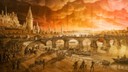
Daguerre's Diorama, which appeared in Paris in 1822, displayed an even larger transparent painting of 14 by 22 meters housed in its own specially-designed building. An array of lighting effects from both the front and behind the semi-transparent painting gave audiences a breathtaking display of naturalistic illusions, heightened by the fact that they looked at the painting through a 13 meters long viewing tunnel created by black cloth, which made the painting appear much further away than it actually was.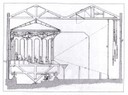
Schinkel and Daguerre were only the most prominent of many early 19th century experimenters with the transformational powers of light, which included many others such as Caspar David Friedrich, Ernst Ferdinand Oehme, and Georg Friedrich Kersting. With the development of dissolving views, the magic lantern could wholly participate in displays of this dynamic visual culture. The most elaborate set of dissolving view lanterns and the most magnificently painted slides were still far cheaper than the £9000 cost to erect the building for Daguerre's Diorama in London, and with dissolving view apparatus easily portable, lantern shows could reach every city, town and village. As the new show became known across Europe, the better dissolving view exhibitors were widely acclaimed for their mix of richly tapestried effects, mechanical moving slides, chromatrope shows ("fireworks without powder", as they were called), and pictures of disasters, famous landmarks, and attractive pastoral scenes. It would be tempting to call dissolving views the sensation of the era, but this would be a mistake: it was the best of the purpose-built panoramas and Dioramas, and the occasional mechanical theatre, that were the truly sensational representations of the play with pictures and light. But the best of the dissolving view shows were not far behind, and through multiple exhibitions and professional travelling showmen booked into first-class entertainment venues, the dissolving lantern shows reached a large and enthusiastic public. Here, at last, emerged a real profession for the lanternist, a possible career of respect and stability, based on expert genuine skills of showmanship that combined abilities of narrative organization, optical experience and physical agility.
Dissolving view lantern showmen and the Royal Polytechnic Institution in London
Among the many adept and skilful showmen who populated the new profession of dissolving view lantern exhibitor can be counted the eminent magician and science lecturer Leopold Ludwig Döbler (1801 - 1864); Wilhelm Bahr (1821-1876), initially a painter and portraitist;24 
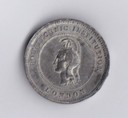
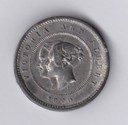
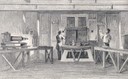
Many notable lanternists such as Benjamin Malden, Louis Jules Duboscq, Albert Smith, Thomas Craddock Hepworth, J. L. King, Sir David Lionel Salomons, John Stone and Henry W. Taunt, worked at the Royal Polytechnic, either as part of the skilful projection team or as independent presenters of their own lectures and shows, and until the end of the century any lanternist who could do so regularly claimed their association with this temple of projection. The multiple lanterns of the Polytechnic exhibitions are also the most likely direct influence on the development of that extraordinary symbol of late-19th century projected showmanship, the Triunial lantern, where three lamphouses and lens systems were stacked vertically above each other. Technically known as a triple lantern when all three optical systems were built into a single wooden case, and as a triunial lantern when the top system was separable so that the apparatus could be used as a biunial with a separate single lantern, this instrument in its most splendid form with a mahogany case, extending brass lens tubes, and dauntingly complex gas fittings, was the epitome of professional lantern-building and showmanship.
The triple lantern was first built for the Polytechnic lecturer Benjamin J. Malden by J. H. Steward in late 1873 or early 1874. It is no coincidence that Malden was widely considered the most commercially successful lanternist of his generation, retiring in 1899. Other leading adopters of the triple lantern were also associated with the Polytechnic: Bridgeman Smith, after whom Steward renamed his triple in 1878; Colin Docwra, for whom the lantern innovator William Charles Hughes built a magnificent Triunial that he advertised was used at the Royal Polytechnic; Sir David Salomon, who ordered in 1890 from J. H. Steward a lantern with an unusual framework that ensured extremely precise matching of each lantern's image on the screen, undoubtedly an advantage to Salomon's science lectures. As David Robinson has shown,28 not only was there prestige involved in the association between a leading lantern builder and a famous lanternist in a golden age for both professional and amateur lantern exhibitions, but the creation of state-of-the-art triple lanterns replete with all conceivable accessories for every projection circumstance also served as an advertisement of the builder's skills and abilities, even if triple lanterns were rarely sold, given their astounding prices of £100 or more — at the time the cost of a modest house.
Photography joins magic lantern culture
The arrival of the new medium of photography in the middle of the 19'h century made an impact on the magic lantern that has been much undervalued. The most obvious artifact of photography in magic lantern culture was the introduction of photographic slides for the lantern beginning in the 1850s, but the swift dissemination of photographic apparatus and knowledge, with its unprecedentedly rapid advance across Europe and America as a hobby, as a profession and as an industry, had a great and unforseen influence on how magic lanterns were made, sold, and used. Driven by a mania for the photographic image which afflicted all countries and most social classes, a mass public became both aware of and involved in a new culture that prized images of nature reproduced with unerring fidelity, a culture where the magic lantern became the principal instrument for the dissemination of photographic images. At the same time, several practical developments in photography, for example in the design and manufacture of lenses and in the chemistry of photographic processes, had a direct effect on magic lantern technology.
Photography also bred new social institutions, not least in the form of amateur or professional clubs for every city and town and which opened up new opportunities for illustrated lectures of every description. Photography also quickly generated an extensive commercial infrastructure that included manufacturers, dealers, agents, retailers and photographic studios, most of which were wholly new businesses which generated new suppliers of magic lanterns as well as new markets for it. As a result, the locus of magic lantern culture, which at the beginning of the 19th century was still in the hands of scientific instrument makers, skilled painters who numbered lantern slides amongst the wide range of their products, and a very few specialist showmen or educators, began by mid-century to shift towards the new photographic world and by the end of the century had been subsumed into the ever-broadening church of photographic practise where it would firmly remain in the 20th century, as the magic lantern slowly disappeared to be replaced by the exclusively photography-based slide projector.
None of these changes were foreseen from anywhere within magic lantern culture when Friedrich and Wilhelm Langenheim, the owners of a daguerreotype studio in Philadelphia, Pennsylvania, brought their projectable photographic glass lantern slides onto the market in 1850, but the groundbreaking efforts of these two photographers, whose sister Anna was married to the Vienna optician and pioneer photographic manufacturer Peter Wilhelm Friedrich Voigtländer, can be seen in retrospect as the symbolic beginning of what was to become the most important shift in magic lantern culture during the past two hundred years of its existence.
The projection of photographic images was not a high priority for many of the inventors and early pioneers of photography. For the most part, they were interested in finding a way to make the images produced by a camera obscura into a permanent record, thereby reducing the considerable task of copying them by hand and at the same time preserving the camera obscura's precision and fineness of detail. This was a goal directly stated by Joseph-Nicéphore and Claude Niépce, Thomas Wedgwood, Louis-Joseph-Mandé Daguerre, and William Henry Fox Talbot, amongst others. Early photographic images were recorded on glass by Sir John Herschel and Abel Niépce de Saint-Victor, amongst others,29 but principally during a search for better photographic chemistry and for materials that would not show the grain and texture of the paper on which a photographic image was printed.30
In contrast to these pioneers, a decade later the Langenheim brothers seem to have had a particular interest in projecting photographic images so that their fine detail could be more easily seen; most likely they recognized the commercial advantage of providing an image that did not need to be examined under a magnifying glass, commonly used at the time for viewing landscape Daguerreotypes. Importing apparatus from their brother-in-law Voigtländer, the Langenheims began to experiment with the projection of Daguerreotypes in 1846, devising an ingenious method of projecting the opaque images by reflected light. By 1850 they began to produce photographic positives on glass, which they patented and called Hyalotypes, for use as both stereoscope views and as lantern slides. Their albumenon- glass images produced very fine detail with a remarkable transparency, and were particularly well suited to projection by the magic lantern. Exhibited in London at the Crystal Palace Exhibition of 1851, the Langenheim photographs were highly praised, especially as the images on glass were considered to have a superior tonal range of light and shadow to photographs on paper.
The mass production of photographic lantern slides
The leading French optical workshop and lantern manufacturer Louis Jules Duboscq took up the French rights to the Hyalotype in 1853, and the Langenheim photographic process was also used by Henry Pepper at the Royal Polytechnic in London the next year. The Langenheim brothers combined production and sale of photographic images for all types of viewing became the model for many slide publishers in the second half of the century, including Bamforth & Co. in Holmfirth, West Yorkshire, which survived until the 1990s as a purveyor of illustrated postcards, and York and Son in London, which was producing over 100,000 lanterns slides annually in the 1890s. The mass production of photographic slides and stereo cards was not based on the Langenheim albumin-on-glass Hyalotype, but rather on the collodion wet plate process that originated in 1851 and became the predominant photographic chemistry after 1855. This process was less expensive, photographically faster, and amenable to industrial manufacture.
The industrialised production and distribution of photographic images was initially dependent on the immense popularity of stereo views from the 1850s onwards; either half of these double images could also easily and economically be issued as a magic lantern slide. In Europe, the London Stereoscopic Company founded in 1854 sold half a million stereo viewers in its first two years of activity and in 1858 advertised its stock as numbering 100,000 different views,31 while in the US "the stereoscope viewer and a box of view cards were as common a feature of the post- Civil War American home as is the television set today."32
While the industrial production of photographic lantern slides only reached its apogee in the 1870s and after, the energetic work of the Langenheim brothers contained from the beginning patterns that would be repeated until well into the 20th century: images taken by the principals of the firm were supplemented by commissioned work or the subsequently purchased negatives of other photographers; purchases of large stocks of negatives, or distribution agreements, with foreign firms ensured that the widest range of subjects was available in the domestic market;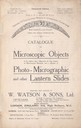
Many of the prominent magic lantern firms of the later 19th century began their existence as manufacturers or suppliers of photographic materials, one evidence of the strong affinity between lantern projection and photography that seemed to make the two media natural partners. A good example is the firm of Ed. Liesegang, founded in 1854 in Elberfeld (today Wuppertal) by Eduard Liesegang (d. 1871) as a manufacturer of photographic plates and papers and a supplier of photographic chemicals. By the time the firm moved to Düsseldorf in 1873, the manufacture of cameras, magic lanterns, enlarging apparatus and other photographic accessories had been added to their stock. By around 1880 the firm had become a specialist in projection apparatus with a full line of sciopticon lanterns, megascopes, and dissolving view lanterns supplied for school, home, and professional use. At the turn of the century, their "Picture Archive" offered some 250,000 slides for purchase or rental, many of them imported or purchased in bulk from other manufacturers. With the arrival of moving pictures, they quickly offered cinematographic projectors to the market, at first made by the British firm of John Wrench & Son and later manufactured under license from the same London company. Liesegang continued to specialise in projection apparatus in the 20th century, surviving in Düsseldorf until 2009 as an audio-visual company with a concentration on LCD projection apparatus and lightweight video projectors.
The firm of Romain Talbot, a photographic supply house founded in Paris in 1855 and which moved to Berlin in 1870 because of the Franco-Prussian war, introduced the important American-designed sciopticon lantern to Germany (see below) in 1873; four years later they published a combination photographic album and catalogue of 2000 natural science photographs intended for the preparation of lantern slides. At the turn of the century, Talbot retained its reputation as a leading photographic manufacturer, noted for their hand cameras, and was as well a prominent lantern manufacturer with a stock of around 20,000 lantern slides one of the largest in Germany.
Ferrier and Soulier, the French producers of glass stereoscope pictures and lantern slides was also founded by a photographer in the late 1850s, Claude-Marie Ferrier, who had worked briefly for Jules Duboscq before starting his own company with Charles Soulier to exploit the fashion for stereoscope images. Their high quality photographs produced from albumin negatives were sold in Britain by Negretti & Zambra in London, and the firm was bought out by Jules Levie et Cie in 1867, which then became the world's largest manufacturers of stereo transparencies and lantern slides, with an international clientele.
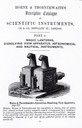
The British partnership of Horne, Thornthwaite and E. G. Wood, which took over the optical firm of Edward Palmer at his death in 1845 and which probably built the first biunial dissolving view lanterns as designed by Wood, were another company deeply involved in photography: William Henry Thornthwaite's A Guide to Photography was issued in 17 editions up to 1860.33
The growing cross-border trade in magic lanterns and slides is also illustrated by the firm of W. Butcher & Sons in Greenwich, a retail pharmacy founded in 1866 which quickly began to supply reputable photographic chemicals and equipment, then adding magic lanterns and chromolithographed slides under the Primus brand. Offering a wide range of lanterns and photographic accessories, Butcher's imported much of their vast stock from abroad, mainly Germany, and continued in business until the 1930s.
New photographic lenses dominate lantern culture
The invention of photography not only provided the opportunity for entrepreneurs to start new businesses, but the technical demands of the new medium also had a direct effect on magic lantern work. When the daguerreotype process was announced, the Daguerre cameras were supplied with a simple meniscus lens designed by Charles Chevalier, which operated at an aperture of f /15. With this lens, and the slowness of Daguerre's original chemical process, an exposure of about 30 minutes in bright sunlight was required to establish an image on the photographic plate. Changes in the chemistry of the developing process was one way to shorten exposure times so that it would be possible to take photographic portraits and not just landscape or architectural views; the only other way to make the process faster was to find a lens that would deliver a wide field of view while working at a larger aperture.
Just such a lens was designed for photographic use in May, 1840, not by an optician or scientific instrument maker, but by the professor of higher mathematics at the university in Vienna, Josef Max Petzval, a novice at lens design who had been persuaded by a colleague in the physics department to accept the challenge of designing a new fast lens for portrait photography.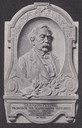
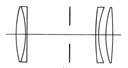
Petzval did not financially benefit from the almost universal adoption of his lens design over the succeeding decades, since he had only an Austrian patent. He famously fought with Voi tländer in the mid-1840s, and Voigtländer moved his firm to Brunswick, Germany, in 1849, from where he had no legal obligations under Petzval's patent. Some 8,000 Petzval lenses had been made by 1850, as the lens was freely copied, sometimes as a "German system" lens, by Ross, Dallmeyer and others in Britain; Jamin & Darlot, Derogy, Lerebours & Secrétan and others in France; Suter in Switzerland; Harrison, Holmes Booth and others in America; and by Voigtländer, Steinheil and Busch, amongst others, in Germany.35
Apart from being a principal lens for photographic cameras right through to the 1920s, the Petzval Portrait Lens also turned out to be particularly well-suited for projection work. Because of its fast aperture, the Petzval lens delivered considerably more light to the screen for any type of illuminant in use, and allowed a bigger picture for any specific lantern given the limitations on the volume of flame, heat, and light that was produced by any individual lantern design. The fast lens also allowed a longer distance between the lantern and the screen. Additionally, the optical quality of the Petzval lens design permitted a wider variety of tonal and colour effects in the painting of magic lantern slides than did lenses in use earlier, while providing a sharp image (with only a small loss of focus at the edges) for the projection of photographic slides. Without such a lens, which came into existence only through the urgent requirements of photographers, the widespread later use of the magic lantern in all kinds of public meetings, classrooms, theatres, and other venues would not have been possible, or would have been drastically inhibited.
The further impact of photography on magic lantern culture
The rise of photography had several further impacts on magic lantern culture. Many new exhibition opportunities for the magic lantern arose with the many photographic clubs and associations that spread through European and American cities, towns, and villages with weekly or monthly meetings, regularly held lantern slide evenings and their own libraries of photographic slides for loan to members. The availability of photographic slides popularised as well a new type of public lecture: the travelogue. Appearing simultaneously with the beginnings of well organized package tours by Thomas Cook and other pioneers of mass tourism, the travelogue reached its epitome in the United States, exemplified in the remarkable career of John Lawson Stoddard, who gave about 200 lectures each year between October and May, with a "course" of five lectures given in each city he visited. Both matinee and evening presentations were offered in the larger cities.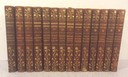
Two examples, amongst hundreds, serve to typify the local lantern lecturer at the end of the nineteenth century. "Professor" Hugh Bertrand Rossell organized the Washington Lecture Association with three colleagues in 1893, with offices in Octagon House, the historic hotel where the Treaty of Ghent was signed by President Madison in 1815. He spent his evening and weekend hours for the next nine years giving lantern shows and lectures in towns and villages south of Washington, D. C. with titles like "Immortal Words of Immortal Men", "Pictures and Poems" and "An Evening with Edgar Allan Poe". His principal employment at the time was as an engineer for the Water Department of the District of Columbia.37 In upstate New York, Professor William P. F. Ferguson was the Principal of the Utica Private Academy, a Methodist minister and former missionary in Mexico. He lectured throughout the region with a repertoire of six programmes,
It is hard to imagine today, when the term "magic lantern" has largely disappeared from use, how widely this first projection instrument penetrated into every corner of life during the 19th century. Its use was by no means limited to professional showmen, elaborate centres like the Royal Polytechnic, or extensive institutions like the Maison de la Bonne Presse in France or the Church Army in Britain. The lantern reached people from every class, including those most disadvantaged, and turns up in scattered reports in the most unlikely places. At one end of the social scale was the Dutchess of Wellington, or Johann Wolfgang von Goethe mentioned above. But the lantern reached the other end of society as well. An 1877 report on "South Carolina Society" reported that recentlyfreed black slaves in the state had gained admission to theatres, exhibitions and lectures in Columbia, South Carolina, but "In Charleston and the country towns they have not thus far attended or secured entrance to such places. But to shows under canvas, such as circuses, magic-lantern exhibitions, and so on, they are invariably allowed admission....."39 The scientist/explorer Alexander von Humboldt used the magic lantern during his extensive trip through the back-country of Spanish America studying the botany and geology of the region between 1799 and 1803: "Seven miles farther on they came to the Vila de Cura, situated in an arid valley almost destitute of vegetation. Here they remained for the night, and joined an assembly of nearly all the residents in the town to admire in a magic-lantern a view of the great capitals of Europe."40 The description of a cooperative distillery in Delft, The Netherlands, noted the amenities provided for workers and their families, including an 800-volume circulating library, as well as the provision of literary and scientific lectures given "in the reading-room during the winter to audiences of twenty to thirty persons. Sundayevening readings of prose and poetry draw about fifty people. The display of the magic-lantern, which is the newest treasure of the club-house, always fills the hall."41
The sciopticon lantern of L. J. Marcy
The important sciopticon lantern, which achieved almost instantaneous popularity in both Europe and America in the early 1870s, was developed in Newport, Rhode Island, by a young inventor principally interested in improving the illumination for magic lanterns projecting photographic slides. Lorenzo J. Marcy wanted to find a substitute for the volatile gas mixture that was used in producing limelight, and at the same time replace the bulky lanterns equipped with the increasingly archaic Argand lamp. The key to Marcy's work was the availability of a new fuel, called kerosene in America and paraffin oil in Britain, which became widely used as an inexpensive, clean-burning new illuminating oil in the 1860s. The new fuel replaced costly whale oil and imperfect fuels like vegetable oils, which sold for 88 cents a gallon at a time when kerosene moved towards a price of 5 cents a gallon. It was the 1860's oil boom in western Pennsylvania that brought affordable illumination to a mass public: by 1866 two-thirds of American kerosene was being exported, mostly to Europe. Ironically, while the heavier fractions of distilled crude oil supplied lubricants for heavy machinery and the railroad industry, the light fraction, gasoline (or petrol, benzine) was simply thrown away, since there was no known use for the substance.42
In April, 1868, Marcy patented a new type of compact magic lantern with a double skin on its body, insulating the outer parts of the apparatus from the heat created by its paraffin lamp.43 The lamp was not described in the patent, but his lantern design was necessitated only by a kerosene-burning wick. Four months later in August, 1868, he patented an improved lamp burner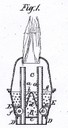
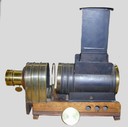
Forever after identified in magic lantern literature as "L. J. Marcy of Philadelphia", the Sciopticon lantern that Marcy had spent years single-mindedly developing was rapidly taken up by photographers, teachers, lecturers, missionaries, and amateurs around the world. Introduced into Germany by the Berlin photographic firm of Romain Talbot in 1872, and to Britain by Walter Woodbury in 1873, artists, photographic societies, and local vicars were quick to endorse and use the sciopticon, with its bright light and its safe petroleum burner. Over the last decades of the 19th century, many manufacturers produced sciopticon-type lanterns, as the term became synonymous with the compact, all-metal, double-walled, paraffinburning lantern.
One outstanding design in production for many years from the early 1880s was the Pinakoscop of J. Ganz & Co. in Zurich,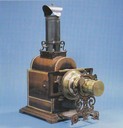
The advent of the sciopticon just at the time when the industrial production of both photographic and lithographic slides was increasing opened a vast new market for lantern apparatus. lt was no longer necessary to be a professional or highly skilled amateur to produce a lantern exhibition before an audience in a classroom or modestly sized auditorium, and the benefits of the hugely expanded market were quickly seen in the growth of lantern firms like Ed. Liesegang, Romain Talbot, the Gebrüder Mittelstraß and A. Krüß & Co. in Germany; Louis Jules Duboscq, Clement and Gilmer, A. Laverne, and Xaviar Mazo in France; the London Stereoscopic Company, Perken, Son & Rayment, Riley Brothers, and W. Watson & Son in Great Britain; and W. Y. McAllister, C. T. Milligan, George Wale & Co., and James W. Queen & Co. in America. As the educational use of the lantern, which had been lurking in the background of lantern practise for nearly 200 years, grew rapidly in the last quarter of the century, these "full service" lantern companies and their many competitors provided a variety of sciopticon lanterns with every imaginable accessory for scientific projection, plus long series of slides on every topic, often from catalogues comprising a hundred or more pages. The growth of the educational market is perhaps best illustrated by tracing the information in Johann Frick's handbooks of apparatus for physical experimentation in schools, Physikalische Technik. In his second German edition of 1861, which was also translated into Engish and published in America the following year, Frick devoted one paragraph and one illustration to the magic lantern, describing how a lantern could be inexpensively constructed and fitted over an existing Argand lamp.50 By 1904, the seventh edition of Frick's work contained some 73 pages of information on a variety of lanterns, illuminants, and accessories from a range of manufacturers.51
Lantern use by religious and temperance groups, combined with the acceptance of the sciopticon lantern into the public education system and its regular use in photographic societies, plus the growing audience for travel lectures, the numerous social clubs, and the continuing shows of professional lantern entertainers (in Winter 1895-6 some 14,000 secular projection shows were given in France alone52) meant that the sciopticon had turned the magic lantern into a commodity that was available everywhere, usable by anyone, and likely to be seen in any setting at any time.
Lantern experiments at the end of the century
Given the widespread experience of the magic lantern and lantern practise in the last quarter of the 19th century, it is not surprising that the basic technological platform of magic lantern projection commonly became an essential component of new experiments in many fields, some of which successfully evolved into practises or instruments that in their final form were hardly recognizable as related to the magic lantern.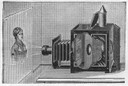
A number of experiments were also undertaken with the magic lantern that produced either specialist lantern designs or unique projection effects. In 1855 the Scots physicist James Clerk Maxwell suggested using three magic lanterns with red, green, and violet filters ("glasses") to project coloured photographs; he demonstrated his effect at the Royal Institution in London on May 17, 1861, projecting an image of a striped ribbon made by Thomas Sutten.53 The triple lantern, or triunial lantern, was a natural and often-used candidate for projecting additive colour photographic images in the 1880s and 1890s, and the noted researcher in colour photography Frederick E. Ives devised and marketed a three-lens accessory for any larger single lantern to project his Kromscop colour pictures,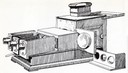
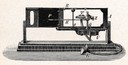
While reports of the actual use of these many devices are scarce, the respected photography historian Erich Stenger wrote that "photographic advertising" using the magic lantern was common in the streets of New York in 1871, and that the projection of advertisments onto low clouds using powerful lanterns was undertaken in Germany before 1914. When advertising was projected onto public buildings in London, such as the Nelson monument in Trafalgar Square, a public outcry arose against the debasement of public space.57 Many companies, such as the biscuit maker Peake, Frean, & Co. or the sausage company Palethorpe & Co., provided advertising slides directly to lantern exhibitors.58 In the middle of the 19th century Karl Friedrich Zöllner, an astronomer with a background in magic lantern work used his experience to develop an astro-photometer that compared the brightness and colour of a star projected from a telescope objective with a standard image from a modified lantern; his device was adopted by leading observatories throughout the world and gained him the first German professorship in astrophysics.59
Of all of the experiments made with specialist magic lanterns during the 19th century, probably none had a more compelling impact or a more fateful consequence for magic lantern practise than the attempt to use the instrument to project moving pictures. By the middle of the 19th century, a variety of complex moving slides were commonly used in lantern projections, either as pictorial elements in short narratives or in elaborate and finely mechanized astronomical slides illustrating the motions of the planets, moon, and stars.60 But it was the near-simultaneous invention of the phenakistiscope by Simon Stampfer in December 1832 and Joseph Plateau in January 1833, both based on scientific experiments with vision conducted by Michael Faraday in 1830-31, that engendered the most significant lantern experiments with motion. The idea of combining this immediately popular optical illusion with the magic lantern was first proposed by T. W. Naylor in 1843,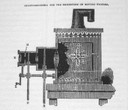
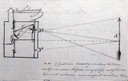
Further experimental stroboscopic lanterns were built by the leading French optical lantern designer and manufacturer Louis Jules Duboscq; the American 0. B. Brown, and Henry Heyl in Philadelphia, who twice publicly demonstrated an apparatus using 18 posed pictures of a waltzing couple and tumbling acrobats in 1870.63 Another experimental lantern for projecting phased drawings was built in 1879 by Eadweard Muybridge and was used extensively in his lectures in America and Europe. He called his instrument the Zoopraxiscope and the press called it "a magic lantern run mad (with method in the madness)."64 More than 160 copies of several models of a stroboscopic viewer called the Schnellseher were built in Germany for the chronophotographer Ottomar Anschütz, 152 of them as a coinoperated automat, during his attempts to commercialize moving pictures in 1889 - 1894. With the development of flexible celluloid film coated with a photographic emulsion that could take virtually unlimited numbers of individual photographs on a single long strip,65 the dreams of 19th century visionaries like Uchatius, Anschütz, Pierre Hubert Desvignes and others for a device that could use hundreds of phased images to present a long narrative or documentary sequences of movement became a reality, as Living Pictures evolved into the Cinema at the turn of the century.
Notably, most pioneer inventors of moving picture machines described their work as continuing the development of the magic lantern. To C. Francis Jenkins, "the moving picture machine is simply a modified stereopticon or lantern, i.e. a lantern equipped with a mechanical slide changer."66 The early technical historian Henry Hopwood wrote in 1899 that "A film for projecting a Living Picture is nothing more, after all, than a multiple lantern slide."67 The experienced lanternist and pioneer moving picture exhibitor Cecil M. Hepworth was very specific about the relationship of the new moving pictures to magic lantern practise, asserting that "it must be remembered that the lantern portion of a cinematograph differs only in one small particular from the arrangements of the older instrument which is so familiar to all of us as the optical or magic lantern," the difference being an adjustment of the optical system to allow the projection of images significantly smaller than the normal size of lantern slides.68
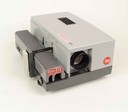
The arrival at the end of the 19th century of the new technology that would become the cinema in the 20th century was arguably the most significant and fruitful of the many experiments with the magic lantern. Although the magic lantern as a distinct projection apparatus and many of the institutions of lantern culture, such as suppliers of lantern slides, remained in the public consciousness as well as active industry until the 1930s, in the first quarter of the 20th century the cinema usurped and then wholly surpassed both the entertainment and the educational functions of the magic lantern. With the lantern at the end of the century already hugely identified with photography, the growing popularity of "sub-miniature" still photography on 35mm film in the 1930s became the last fatal blow for the magic lantern as an independent instrument. The convenience and light weight of portable cameras taking up to 40 images on a single roll of film, and the practicality of slides measuring only 2 inches by 2 inches (5 by 5 centimeters) including their protective frames, meant that the magic lantern with its heavy double-glass slides quickly became obsolete. It was transformed into a compact slide projector, normally using a linear cassette feeder popularized by Leitz or, after 1961, the ubiquitous circular tray of the Kodak company's Carousel apparatus.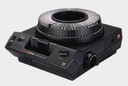
- ^ Watkins and Hill order book for 1816, Elliott Archive, page 11. lam indebted to Ron Bristow for a copy of this page.
- ^ For a complete transcription of this 24 page document now in the collection of The Magic Lantern Society, London, and a note on its date, see "A Magic Lantern Entertainment by Timothy Toddle", in Dennis Crompton, David Henry and Stephen Herbert, eds, Magic Images, The Art of Hand-Painted and Photographic Lantern Slides (London, 1990: The Magic Lantern Society of Great Britain), pp. 47- 53.
- ^ Goethe's Werke, Sophien-Ausgabe, (Weimar, 1889: Hermann Böhlau), Ill Abt. 3. Bd, Tagebücher, 14 November 1807, p. 295.
- ^ ibid., Tagebücher, 3 December 1807, p. 304
- ^ Letter of Graf Brühl to J. W. von Goethe, 26. Mai 1819, in Johann Teichmann, Literarischer Nachlaß (Stuttgart, 1863), p. 248.
- ^ See Darner Waddington, Illuminating Magic Lanterns, supplement to The New Magic Lantern Journal, March 1995, p. 1.
- ^ Abraham Rees, Universal Dictionary of Arts, Sciences, and Literature (London, 1819), cit. John J. Wolfe, Brandy, Balloons & Lamps. Ami Argand, 1750-1803 (Carbondale and Edwardsville, 1999: Southern Illinois University Press), p. 1. The immediate popularity and utility of the lamp led to its instantaneous copying, plus intense disputes about Argand's patents in Britain and France, well documented in Wolfe's book above.
- ^ A Descriptive Catalogue of Optical, Mathematical, Philosophical, and Chemical Instruments and Apparatus, constructed and sold by Watkins and Hill. London, 1832, p. 10.
- ^ Entry, "Oxy-Hydrogen Microscope", in: G. Francis, The Dictionary of the Arts, Sciences, and Manufactures (London, 1842: W. Brittain, 11 Paternoster Row), n. p. [OX - OX]
- ^ Goldsworthy Gurney, A Course of Lectures on Chemical Science, as Delivered at the Surrey Institution (London, 1823: G. W. B. Whittaker), p. 294.
- ^ George Sanger, Seventy Years a Showman (1910), zit. nach Magic Lantern Society of Great Britain, Newsletter No. 15 (September 1986), p. 7.
- ^ Charles Woodward, A Familiar Introduction to the Study of Polarized Light.... (London, 1851: John Van Voorst), p.41.
- ^ See, for instance, Andrew Pringle, The Optical Lantern (New York, 1890: the Scovill and Adams Company), where gas regulators and limelight production is discussed on pp. 32-63 in 106 pages of text.
- ^ The Times (London), 8 February 1812, cit.: Mervyn Heard, "Paul de Philipsthal & the phantasmagoria in England, Scotland and Ireland. Part Three. Phew!", in: New Magic Lantern Journal, Vol. 8, No. 4 (December 1999), p. 10.
- ^ Playbill, M. Henry at the Haymarket Theatre, London (British Library).
- ^ Childe advertisement, March 1827, cit.: Mervyn Heard, ibid., p. 12.
- ^ ibid., p. 12.
- ^ A Descriptive Catalogue of Optical, Mathematical, Philosophical, and Chemical Instruments and Apparatus, constructed and sold by Watkins and Hill. London, 1832, p. 10.
- ^ ibid., p. 10.
- ^ On Schinkel's transparent paintings and their reception, see Birgit Verwiebe, Lichtspiele. Vom Mondscheintransparent zum Diorama (Stuttgart, 1997: Füsslin Verlag), pp. 45-50.
- ^ Ludwig Cate!, "Darstellungen von merkwürdigen Gegenden und berühmten Bauwerken in der Art der Panoramen," in: Berlinische Nachrichten von Staats- und gelehrten Sachen, 29 December 1808.
- ^ Entry, "Diorama", in: G. Francis, The Dictionary of the Arts, Sciences, and Manufactures (London, 1842: W. Brittain, 11 Paternoster Row), n. p. [DI - DI]
- ^ Birgit Verwiebe, ibid. (Note 29), p. 76.
- ^ Unsigned article quoting the work of Gabriele Hahn, "Wilhelm Bahr ein mecklenburgischer Pionier der Photographie", HTTP://www.svz.de/archiv/magmv/2001/05.Mai/bahr.html, [June 2002]
- ^ The Photographic News, Vol. 23 (1879), p. 378.
- ^ Catalogue of the Royal Polytechnic Institution, 1845, p. 5.
- ^ A. N. Rintoul, Transparent Painting on Glass in Water, Oil and Varnish Colours (London, n.d. [c. 1870], S. 54. For descriptions of some unique Royal Polytechnic effects slides, see Edmund H. Wilkie, "Optical and Mechanical Effects for the Lantern", parts 1 - 15, in The Optical Magic Lantern Journal, September 1898 - April 1900, reproduced in Denis Crompton, David Henry and Stephen Herbert, eds, Magic Images. The Art of Hand-Painted and Photographic Lantern Slides (London, 1990: The Magic Lantern Society of Great Britain), pp. 85-96 [Parts 1-111 and in The New Magic Lantern Journal, Vol. 6, No. 2, January 1991, pp. 12-15 [Parts 12-15].
- ^ David Robinson, "The Rise and Fall of the Triple Lantern", in Dennis Crompton, Richard Franklin and Stephen Herbert, eds., Servants of Light. The Book of the Lantern (London, 1997: The Magic Lantern Society), S. 34-45.
- ^ See Helmut Gernsheim, A Concise History of Photography (Third Revised Edition; New York, 1986: Dover Publications), pp. 8-15. For an extended discussion of the intentions and experiments of early photography, see Geoffrey Batchen, Burning With Desire. The Conception of Photography. (Cambridge/London, 1997: The MIT Press).
- ^ Gernsheim, ibid., pp. 16-18.
- ^ John Jones, Wonders of the Stereoscope (London, 1976: Jonathan Cape), Bd. 1, p.26.
- ^ Reese V. Jenkins, Images and Enterprise. Technology and the American Photographic Industry, 1839 to 1925 (Baltimore & London, 1975: The Johns Hopkins University Press), p. 50.
- ^ See David Robinson, "The First Biunial", in: The New Magic Lantern Journal, Vol. 8, No. 1 (October 1996), p. 11. Robinson's article is unsigned due to the error of the NMLJ's editor, one David Robinson.
- ^ Petzval actually designed two lenses at the same time: the f /3.6 portrait lens with 150mm focal length, and a wide-angle f /8.7 lens. Reliable accounts of Petzval's work can be found in Joseph Maria Eder, Ausführliches Handbuch der Photographie, Bd. 1, 1. Th: Geschichte der Photographie (Halle a. S., 1905 [3. Auflage]: Wilhelm Knapp), pp. 220-29; Moritz von Rohr, Theorie und Geschichte des Photographischen Objektives (Berlin, 1899: Julius Springer), pp. 248-57; and Rudolf Kingslake, A History of the Photographic Lens (Boston, etc., 1989: Academic Press, Inc.), pp. 35-8 and p.263.
- ^ Rudolf Kingslake ibid. (Note 64), p. 38.
- ^ John L. Stoddard, John L. Stoddard's Lectures (Boston, 1897: Balch Brothers Co.). The five additional volumes appeared between 1901 and 1909. Burton Holmes also published a series of his lectures in 12 volumes: Burton Holmes, Travelogues (New York, 1910: McClure Co.).
- ^ Hugh Bertrand Rossell, Stemmata Rossellana (3rd. Edition; Chicago, 1939), pp. 97-8.
- ^ Promotional brochure of William P. F. Ferguson, c. 1900, author's collection.
- ^ "South Carolina Society", by A South Carolinian, in The Atlantic Monthly, Vol XXXIX, No. CCXXXVI, June, 1877, p. 676.
- ^ W. Macgillivray, The Travels and Researches of Alexander von Humboldt (New York, 1869: Harper & Brothers), p. 161.
- ^ Alfred Bishop Mason, "A Dutch Success in Cooperation", letter to The Century Magazine, vol. XXXII, No. 4, August 1886, p. 649.
- ^ For a glimpse of the growth of the early oil industry and its reliance on the marketing of kerosene, see Ron Chernow, Titan. The Life of John D. Rockefeller, Sr. (New York, 1998: Random House), esp. pp. 50, 73-7, 99-104 and 252-55.
- ^ L. J. Marcy, US Patent 77,300, Improvement in Magic-Lanterns, filed April 28, 1868.
- ^ L. J. Marcy, U.S. Patent 80, 984, Lamp Burner, filed 11 August 1868.
- ^ L. J. Marcy, U. S. Patent 92,330, Improvement in Magic Lanterns, filed July 6, 1869.
- ^ Lorenzo J. Marcy, The Sciopticon Manual (Philadelphia, 1871: Scherman & Company). In lantern histories, various dates are given for the first edition of this publication, but the Library of Congress received its copy in 1871 and the bibliographic record is clear.
- ^ Sigmund Theodor Stein, Das Licht im dienste wissenschaftlicher Forschung (Zweiter Auflage)(Halle a. S., 1887: Verlag von Wilhelm Knapp), Bd. II, Heft 5, Specieller Theil VI u. VII, p. 239. Stein himself used a Pinakoscop lantern; see 2. Bd., p. 256.
- ^ ibid., pp. 234-5. See also pp. 239-41.
- ^ Johann Frick, Physikalische Technik, oder Anleitung zu Experimentalvortragen sowie zur Selbstherstellung einfacher Demonstrationsapparate (Braunschweig, various dates: Friedrich Vieweg und Sohn. See, for example the 7th edition (1904-7), Bd. II., Theil II., p. 1174, note 2.
- ^ J[ohann] Frick, Physical Technics; or practical instruction for making experiments in physics and the construction of physical apparatus with the most limited means. (Philadelphia, 1862: J. B. Lippincott & Co.), p. 216.
- ^ J[ohann] Frick, Physikalische Technik, oder Anleitung zu Experimentalvortragen sowie zur Selbstherstellung einfacher Demonstrationsapparate (Siebente vollkommen umgearbeitete und stark vermehrte Auflage von Dr. Otto Lehmann)(Braunschweig, 1904-9: Friedrich Vieweg und Sohn), Bd. I, pp. 155-208, B. II, pp. 1174-93.
- ^ Laurent Mannoni, "Elbow to Elbow. The Lantern/Cinema Struggle", in the New Magic Lantern Journal, Vol. 7, No. 1 (January 1993), P. 1.
- ^ On Maxwell see Brian Coe, Colour Photography (London, 1978: Ash & Grant), pp. 28-30.
- ^ On Ives, ibid., pp. 39-42.
- ^ Oskar Zoth, Die Projections-Einrichtung und besondere Versuchsanordnungen für physikalische, chemische, mikroskopische u. physiologische Demonstrationen am Grazer physiologischen Institute (Wien/Pest/Leipzig, 1895: A. Hartleben's Verlag), pp. 50-55, 84.
- ^ For a concise review of late-19th century advertising lantern patents, see Stephen Herbert, "Lanterns for Advertising", in Dennis Crompton, Richard Franklin and Stephen Herbert, eds., Sen/ants of Light. The Book of the Lantern (London, 1997: The Magic Lantern Society), pp. 80-85.
- ^ Erich Stenger, The March of Photography (London & New York, 1958: The Focal Press), p. 130. Most of this book is a translation of his earlier Die Photographie in Kultur und Technik, published in 1938. See also "Die Lichtbild-Reklame" in Paul Ed. Liesegang's Projektions-Kunst( XII. Auflage; Leipzig, 1909: Ed. Liesegang's Verlag, pp. 293-96.
- ^ See entries 340M and 385D in Herman Hecht, Pre-Cinema History. An Encyclopaedia and Annotated Bibliography of the Moving Image Before 1896 (London, etc., 1993: Bowker/Saur). Peake, Frean had an abiding interest in using media displays, and in 1906 produced a feature-length documentary film on their biscuit factory which survives at the National Film and Television Archive, London.
- ^ See Klaus B. Staubermann, "The trouble with the instrument: Zöllners photometer", in: Journal for the History of Astronomy, 31 (2000), pp. 323-38, and Klaus B. Staubermann, "Making stars: projection culture in nineteenth-century German astronomy", in: British Journal for the History of Science, 34 (2001), pp. 439-451.
- ^ For a description of a typical set of The Old Mill, see Deac Rossell, Living Pictures. The Origins of the Movies (Albany, 1998: SUNY Press), pp. 13-14. Günther Holzhey, "World Machines' and World- Views", in: The New Magic Lantern Journal, Vol. 9, No. 4 (Summer 2003), pp. 54-57, describes a set of astronomical slides issued by Carpenter and Westley early in the 19th century.
- ^ Ludwig Döbler, patent application of 5 January 1847, Beschreibung einer neuen Latema magica, welche bewegliche Figuren an der Wand hervorbringt, genannt. Archiv der Technischen Universitat Wien. Döblers patent was granted on 23 January 1847 and ran for two years. Privilegien-Register No. 4829 v. 23. Jänner 1847.
- ^ Debler, ibid. pp. 309-12, and Robert Kaldy-Karo, Ludwig Döbler, genius des Biedermeier (Horitschon, 2001: Novum Verlag), pp. 192-205.
- ^ F. Paul Liesegang (Trans. and ed. Hermann Hecht), Dates and Sources. A contribution to the history of the art of projection and to cinematography. (London, 1986: The Magic Lantern Society of Great Britain), p. 38.
- ^ George Augustus Sala in the Illustrated London News, 28 March 1882, p. 2.
- ^ On the development of celluloid, see Deac Rossell, "Exploding Teeth, Unbreakable Sheets and Continuous Casting: Nitrocellulose from Gun-Cotton to Early Cinema", in: Roger Smither, ed., This Film is Dangerous. A Celebration of Nitrate Film (Brussels, 2002: Fädäration Internationale des Archives du Film), pp. 37-51.
- ^ C. Francis Jenkins, Animated Pictures (Washington, D. C., 1898: By the Author), p. 100.
- ^ Henry Hopwood, Living Pictures. Their history, photo-production and practical working. (London, 1899: The Optician & Photographic Trades Review), p. 188.
- ^ Cecil M. Hepworth, Animated Photography. The ABC of the Cinematograph. (London, 1897: Hazell, Watson, & Viney, Ld.), p. 13. On the relationship of early cinema to the magic lantern, see Deac Rossell, "Double Think: The Cinema and Magic Lantern Culture", in: John Fullerton, ed., Celebrating 1895. The Centenary of Cinema. (London-Paris-Rome-Sydney-Bradford, 1998: John Libbey & Company/ National Museum of Photography, Film and Television), pp. 27-36.